

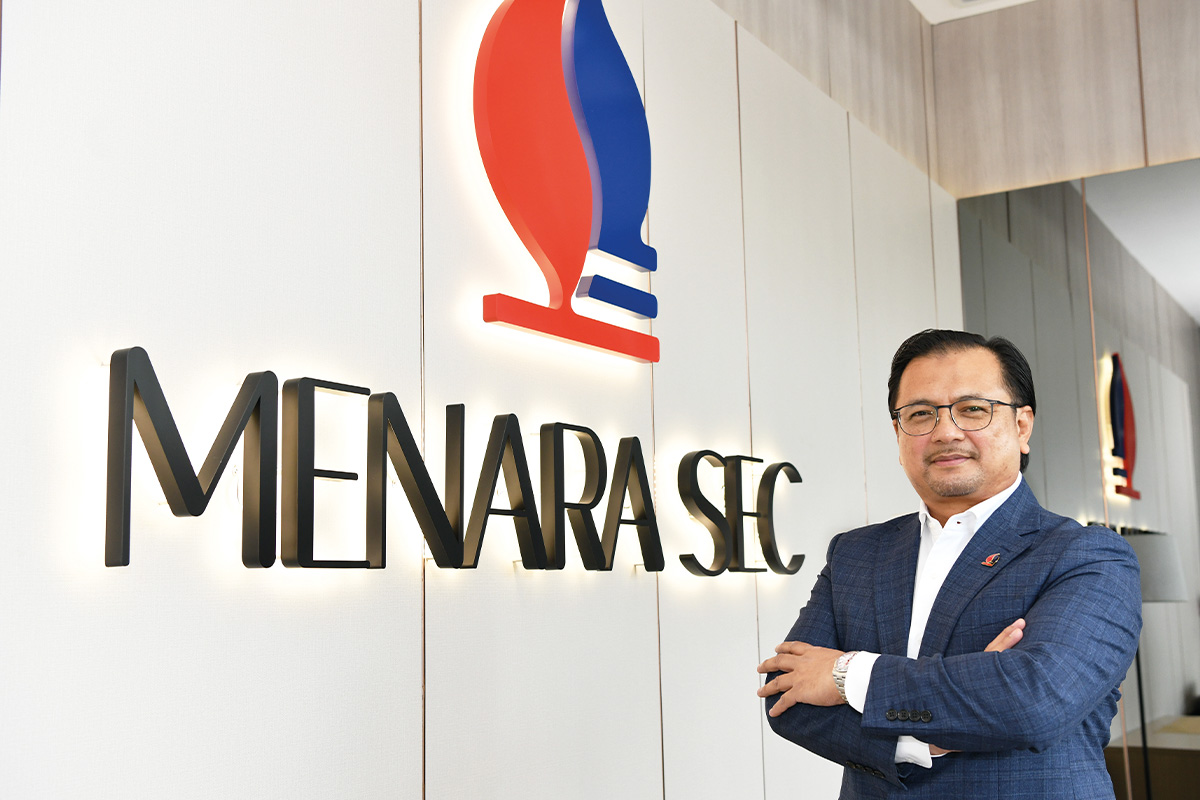

On the surface, natural gas pipelines may look like just infrastructure — long stretches of steel across Sabah’s rugged terrain. But for Datuk Adzmir Abd Rahman, CEO of Sabah Energy Corporation Sdn Bhd (SEC), they represent something more foundational.
“Every kilometre of pipeline that we lay is not just steel, it’s a lifeline for Sabah’s economic growth,” he says. “Without it, we’re leaving ourselves without an option. We risk becoming dependent on expensive fuels, and we would become less competitive.”
This belief that infrastructure is destiny lies at the heart of SEC’s evolution from a utility company to a strategic energy player and a company poised to manage gas distribution to consumers in the state. Over the past four decades, SEC together with industry partners have steadily built the backbone of Sabah’s natural gas distribution network, aligning closely with Malaysia’s national energy transition ambitions and the state government’s “Hala Tuju Sabah Maju Jaya” agenda.
Today, with new partnerships, cutting-edge projects and financial tools in motion, SEC stands on the cusp of an ambitious new phase marked by energy diversification, infrastructure modernisation and sustainable finance.
FROM UTILITY ROOTS TO STRATEGIC PLAYER IN SABAH
Formed in 1981, SEC began as a statutory body known as Perbadanan Tenaga Negeri Sabah. Its initial role was to support the Sabah Gas Utilisation Project (SGUP), an initiative aimed at diverting offshore gas flaring into productive use through pipeline transport to Labuan.
After its privatisation in 1997, the company shifted gears and began expanding its pipeline network across mainland Sabah.
“We delivered our first natural gas to Kota Kinabalu Industrial Park (KKIP) in 2001. Since then, we’ve never failed to pay dividends to the state,” Adzmir says. “Strong governance, prudent financial management and a clear business roadmap — these have been critical for our journey.”
From its two main supply hubs in Sabah Gas Terminal in Tuaran and Sabah Oil and Gas Terminal in Kimanis, SEC delivers energy to much of Sabah’s industrial and power backbone, supplying the baseload for nearly 86% of the state’s energy needs. Together, the terminals are designed to handle up to 1,400 MMscfd, supporting over 40 offtakers, including five power plants with a combined capacity of 880MW, and the LNG Virtual Pipeline System, delivering energy to the east coast of Sabah.
Such a system anchors Sabah’s economic and industrial activities with a stable and reliable energy supply.
With this foundation in place, SEC has begun investing in natural gas infrastructure by acquiring assets from Petroliam Nasional Bhd (PETRONAS), taking on a more prominent role in gas facilities in Sabah and Labuan in the future, and laying the groundwork to future-proof the grid.
BUILDING INDUSTRIAL MOMENTUM WITH CLEANER ENERGY
If pipelines form the veins of Sabah’s industrial body, its latest major deal may be the beating heart. In March 2025, SEC secured a landmark agreement to supply 150 MMscfd of natural gas to ESTEEL Enterprise Sabah Sdn Bhd, a greenfield investment slated to anchor Sabah’s industrial transformation.
According to Adzmir, the ESTEEL plant — which will produce 2.5 million tonnes of hot briquetted iron annually — will replace traditional coke-based steelmaking with natural gas as a reducing agent. “We share a common vision with ESTEEL to reduce the carbon footprint,” he says. “Their plant will be among the cleanest in the region, in terms of CO emissions.”
The deal — valued at over RM1 billion a year — was made possible through upstream support from PETRONAS, state agencies like the Energy Commission of Sabah (ECOS) and the Ministry of Industrial Development and Entrepreneurship (MIDE), as well as coordination with SMJ Energy Sdn Bhd.
“It’s a flagship foreign direct investment for Sabah. It will create 2,800 jobs and bring RM9 billion in investment,” Adzmir says. “We’ve proven the model, and now we can replicate it for others.”
MATCHING ENERGY SUPPLY WITH INDUSTRIAL AMBITION
Replicating the success of landmark deals like ESTEEL will depend on Sabah’s ability to secure long-term, reliable gas supply to meet the rising demand from new industries.
In support of that goal, SEC co-authored the Sabah Gas Strategy, a document designed to align upstream investment viability with downstream demand certainty. The success of Sabah’s industrial development pipeline depends heavily on credible long-term offtakers, and SEC is playing a central role in shaping that landscape, helping align state-level infrastructure with market appetite.
“We started with the Sabah Gas Master Plan in 2019 with PETRONAS. Today, we’re looking at nearly 1,000 MMscfd of total gas supply by 2028,” Adzmir explains.
“One of our roles is to ensure the market is ready for future supply. Our input reflects the downstream projection of gas utilisation, including commercial appetite and supply tenure,” he adds.
BUILDING CAPACITY THROUGH INFRASTRUCTURE, TALENT AND RENEWABLE EXPANSION
Adzmir is clear-eyed about the scale of transformation underway. SEC currently holds equity interests in power-generation assets totalling 485MW, with only about 5MW derived from renewable sources. By 2030, the company aims to increase its generating assets to 1,149MW, with roughly 40% coming from renewables.
To deliver this, SEC is investing in both people and platforms. “We enhance our technical capability by focusing on appropriate upskilling and training of our personnel to keep them on par with industry best practices. We collaborate with PETRONAS, Gas Malaysia Bhd, higher learning institutions such as Universiti Malaysia Sabah, and our partners like Envision Group from China to groom the next generation of technical experts and leaders,” he says. “We’re adopting artificial intelligence (AI) and digitalisation tools — for example, to model wind speed and energy yields in our wind projects.”
That attention to detail is also shaping SEC’s identity. “We want to be a premier billion-dollar company, not just in Sabah but in Malaysia. We aim to be the largest power producer in Sabah and a major gas player in the country by working with PETRONAS,” Adzmir adds.
Even as natural gas continues to serve as a transitional energy source and the present-day anchor, SEC is laying tracks for Sabah’s low-carbon future. Its solar facility in Labuan has been operational since 2022, while a 15MW solar farm in Tuaran is currently under development.
Most notably, SEC is spearheading the development of a 100MW wind farm in northern Sabah, which, according to Adzmir, will be the first utility-scale wind project in Malaysia.
“Over the next decade, the wind project will be developed in phases. Phase 1 will be adopting the ultra-low-speed wind turbine technology, and we recently received the Initial Letter of Notification (ILoN) from ECOS. Phase 1 of the project is expected to be completed in 2028,” he says.
SUKUK FOR A SUSTAINABLE FUTURE
Capital remains a critical enabler of SEC’s long-term ambitions. In 2025, the company appointed Maybank Investment Bank as its sole principal adviser, lead arranger and sustainability structuring adviser for its inaugural sukuk programme of up to RM3 billion in nominal value, to be issued in tranches according to its funding requirements.
“We are excited about our growth, and with this sustainability-ready funding platform, it will support the development of generation capacity, renewables, gas infrastructure, and enhancing efficiency as well as reliability for our energy transition efforts while keeping the costs competitive for the people of Sabah. Our ability to raise financing competitively from the capital market will translate into more affordable energy cost for our customers. The first tranche is expected to be issued by the fourth quarter of 2025.”
“We aspire to secure our financial future by competitively raising capital from the market through our AAA-rated sukuk issuance, thereby diversifying our funding sources.”
At its core, SEC’s growth story is deeply intertwined with the development of Sabah. Its mission goes beyond commercial success to include environmental stewardship and long-term social impact through its ESG framework.
“As we progress on our journey from natural gas as a transitional fuel towards renewable energy, we don’t just power Sabah, we energise its progress anchored on sustainability,” Adzmir says.
With credible offtakers, an improved power grid, strengthened gas infrastructure and renewed investment, Sabah may well be one of Malaysia’s most closely watched growth stories in the coming decade.
And SEC, once a background utility, now sits firmly at the centre of that transformation.