

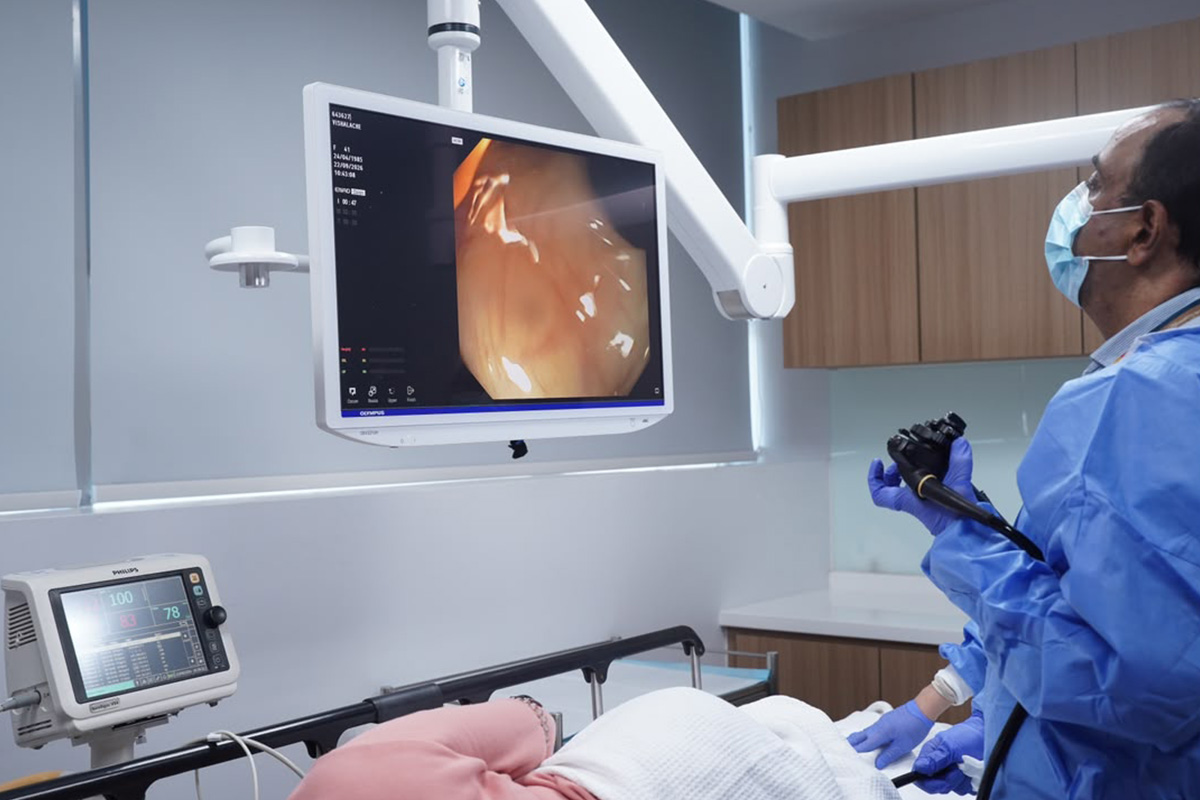
First deployment of the ENAD artificial intelligence endoscopy system across KPJ’s nationwide hospital network adds real-time lesion detection and polyp assessment to colonoscopy in Johor Bahru
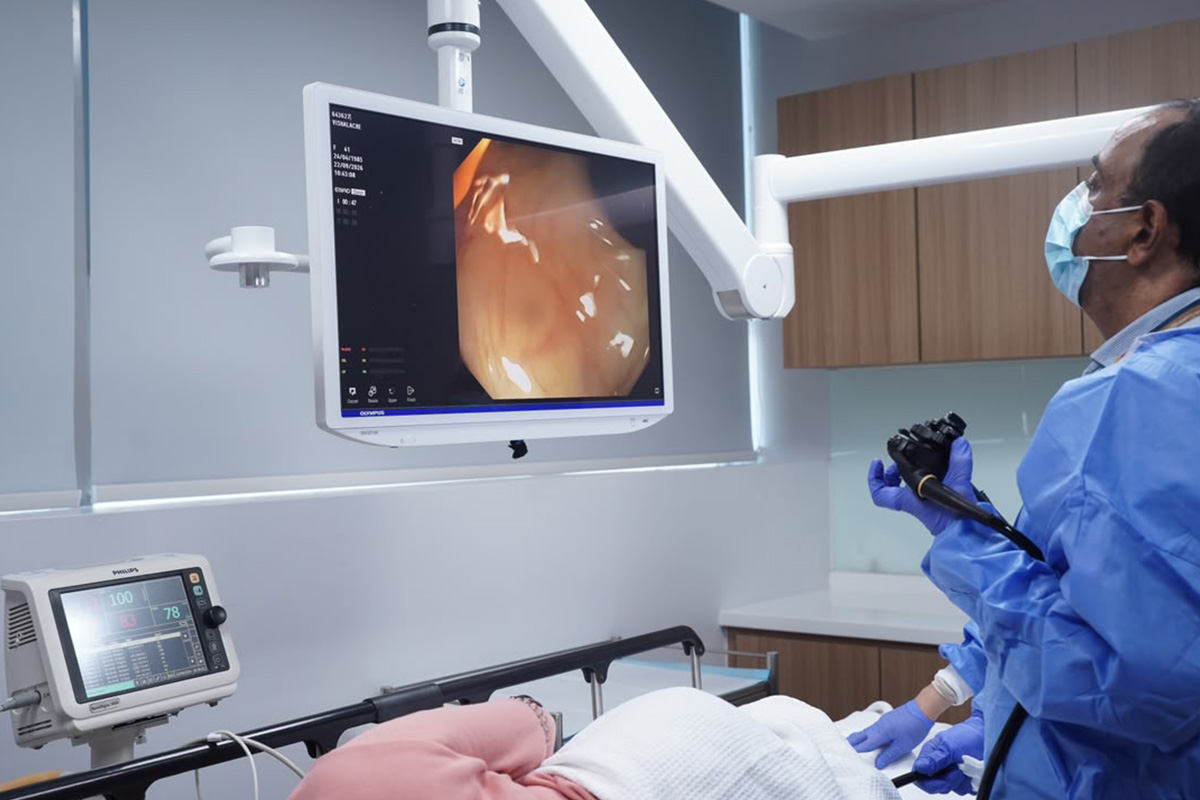
Johor Bahru, 13 October 2026 – KPJ Healthcare Berhad (“KPJ Healthcare” or “the Group”), Malaysia’s first private Academic Health System, has introduced AI-assisted colonoscopy at Johor Specialist Hospital (“JSH”) in Johor Bahru to support the early detection of colorectal cancer. The hospital is the first within KPJ’s nationwide network to adopt ENAD (Endoscopy as AI-powered Device), an artificial intelligence system developed by South Korean medical AI company Ainex Corporation, strengthening its capabilities in colorectal cancer screening and diagnosis.
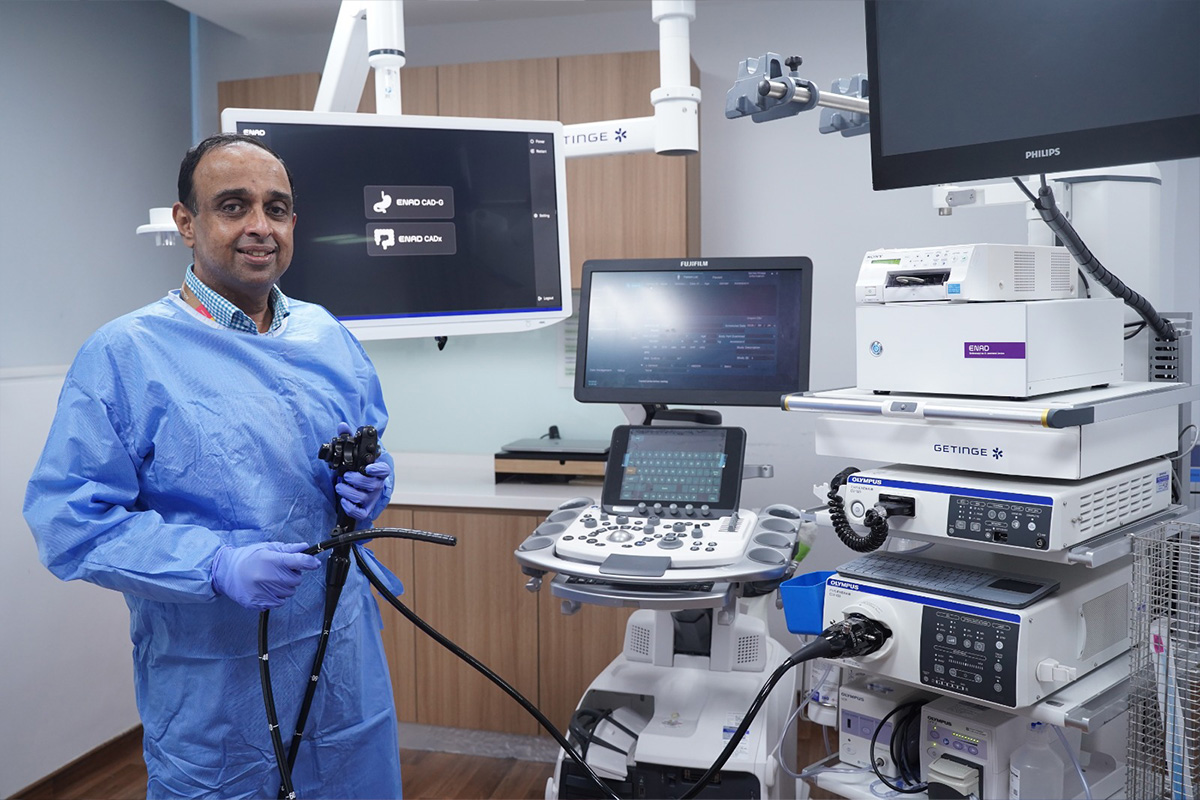
ENAD works with JSH’s existing Olympus colonoscopy equipment to analyse images in real time. The system combines Computer-Aided Detection (“CADe”) and Computer-Aided Diagnosis (“CADx”) to help specialists identify potential colorectal lesions, including small or flat abnormalities that may be difficult to see, and to assess the characteristics of polyps, which are growths on the inner lining of the colon. In simple terms, CADe highlights areas on the screen that may need a closer look, while CADx helps the specialist assess what type of polyp it is likely to be.

Some polyps can develop into cancer over time, making early identification and assessment important. ENAD provides specialists with an additional visual reference during colonoscopy to support a thorough examination, particularly when abnormalities are less obvious.
Colorectal cancer is the second most common cancer in Malaysia, and around 70% of patients are diagnosed at stage III or IV, according to the Ministry of Health’s National Strategic Plan for Colorectal Cancer 2021–2025. Colonoscopy allows specialists to examine the inner lining of the colon and remove polyps before they can become cancerous, which is why a thorough examination matters.

Professor Dato’ Dr Hanafiah Harunarashid, Officer-in-Charge of KPJ Healthcare Berhad, said, “The introduction of ENAD at JSH is an important development for KPJ. It demonstrates how AI can provide additional support in colorectal cancer screening, where the early identification and assessment of abnormalities are particularly important. For us, the priority is to apply AI where it can support clinical decisions and improve the quality of care. This means choosing technologies that address specific clinical needs, ensuring they are used responsibly and maintaining the standards our patients expect. That is how we intend to advance the use of AI across our hospitals.”

Dr Abraham Mathew George, Consultant Internal Medicine, Gastroenterology and Hepatology at Johor Specialist Hospital, said, “During colonoscopy, some abnormalities can be difficult to distinguish from the surrounding tissue, particularly when they are small or flat. The additional visual information provided by ENAD can help us examine areas that warrant closer attention. AI does not replace the expertise or judgement of the endoscopist. It supports our clinical assessment and decisions on whether further investigation, treatment or follow-up is needed. Our aim is to make each examination as thorough as possible and contribute to the early detection and prevention of colorectal cancer.”
The introduction of ENAD also supports KPJ Healthcare’s wider strategy under the KPJ Health System (“KPJHS”), which integrates Practice, Education and Research & Innovation. As the Group advances the convergence of artificial intelligence, genomics and value-based care, initiatives such as ENAD reinforce its focus on applying technology to support clinical decisions and improve the quality of patient care. JSH is also the hub of KPJ’s first Centre of Excellence, the Heart and Lung Centre of Excellence, launched in December 2025.
For more information on Johor Specialist Hospital and its gastroenterology and endoscopy services, visit https://www.kpjhealth.com.my/johor.
At a glance
- What: AI-assisted colonoscopy using ENAD, which combines Computer-Aided Detection (CADe) and Computer-Aided Diagnosis (CADx).
- Where: Johor Specialist Hospital, Johor Bahru – the first hospital in the KPJ network to use ENAD.
- How it works: ENAD runs alongside JSH’s existing Olympus colonoscopy equipment and analyses images in real time.
- Why it matters: Colorectal cancer is the second most common cancer in Malaysia; finding and assessing polyps early supports prevention and early detection.
- Role of the doctor: AI supports, but does not replace, the endoscopist’s expertise and clinical judgement.
_Gold_20260604175854_r0bbdq.jpg)
About KPJ Healthcare Berhad
KPJ Healthcare operates 29 hospitals across Malaysia and three Ambulatory Care Centres, serving 3.3 million patients annually with 1,491 medical consultants. Nineteen hospitals are accredited by the Malaysian Society for Quality in Health (“MSQH”) and four by Joint Commission International (“JCI”). As Malaysia’s first private healthcare provider to establish an Academic Health System, the KPJ Health System (KPJHS) integrates practice, education, research and innovation to drive clinical excellence and patient experience. Beyond hospitals, KPJ Healthcare operates Klinik Waqaf An-Nur (KWAN) clinics, dialysis centres and mobile clinics nationwide, and offers more than 40 academic programmes at KPJ Healthcare University (KPJU). KPJ Healthcare has been a constituent of the Bursa Malaysia FTSE4Good Index since 2016.