


— Datuk Kamal Arifin A Rahman,
Tenaga Nasional Bhd Chief Retail Officer
For years, owning a battery electric vehicle (BEV) in Malaysia came with an unspoken geographic caveat: stay close to the Klang Valley. Long-distance journeys beyond the urban centre — whether heading north to Perlis, traversing to the East Coast or cutting across to Kelantan — turned “range anxiety” from a popular talking point into a major planning hurdle.
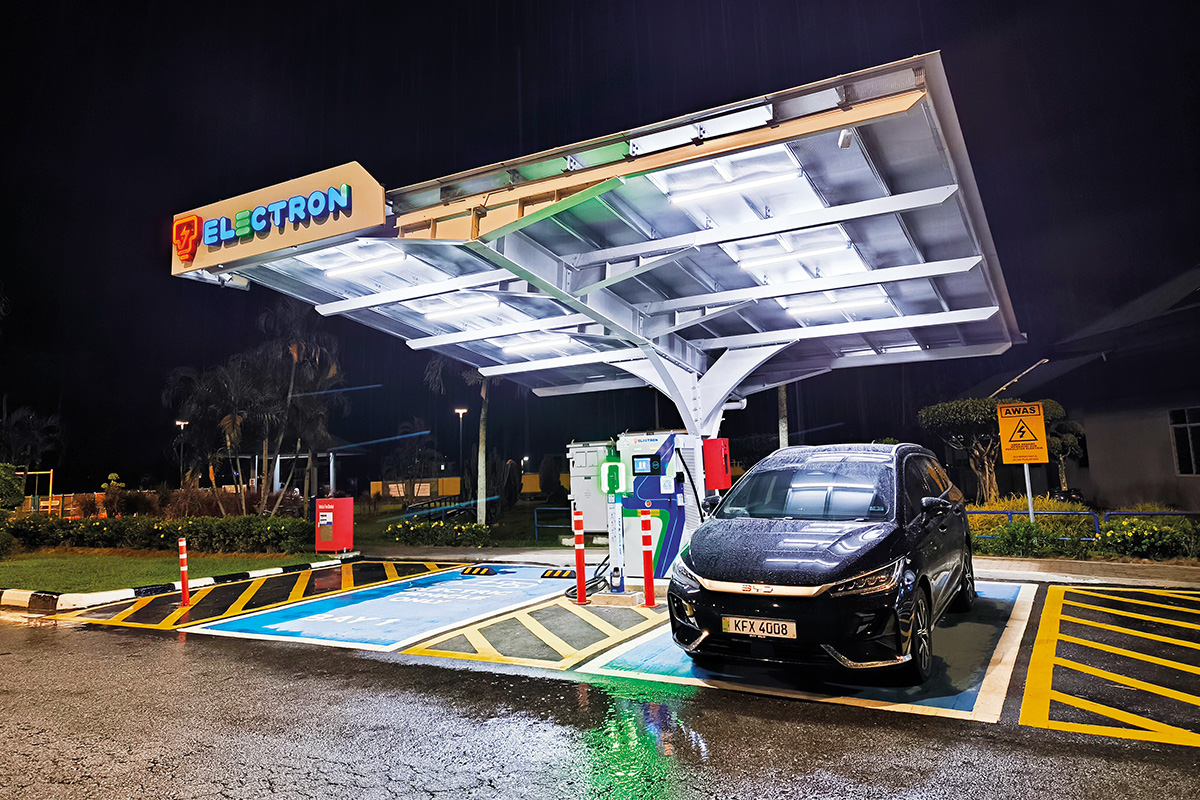
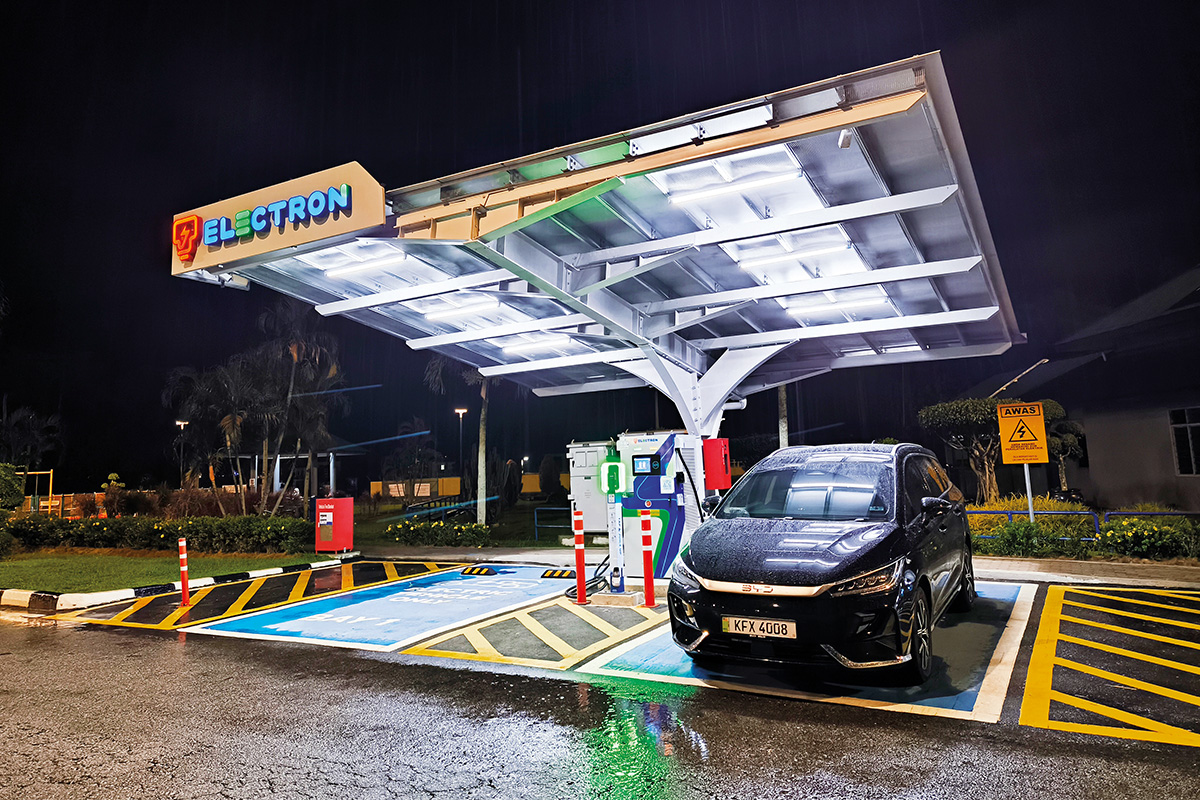
That map changed on March 17. With its latest series of energised sites, Tenaga Nasional Bhd’s charging network, TNB Electron, officially achieved coverage across all 13 states.
From Kuala Lumpur to Kangar, there is now at least one charge point operating in every state, marking the first clear signal that Malaysia’s EV migration is expanding beyond a central-region focus into a nationwide reality.
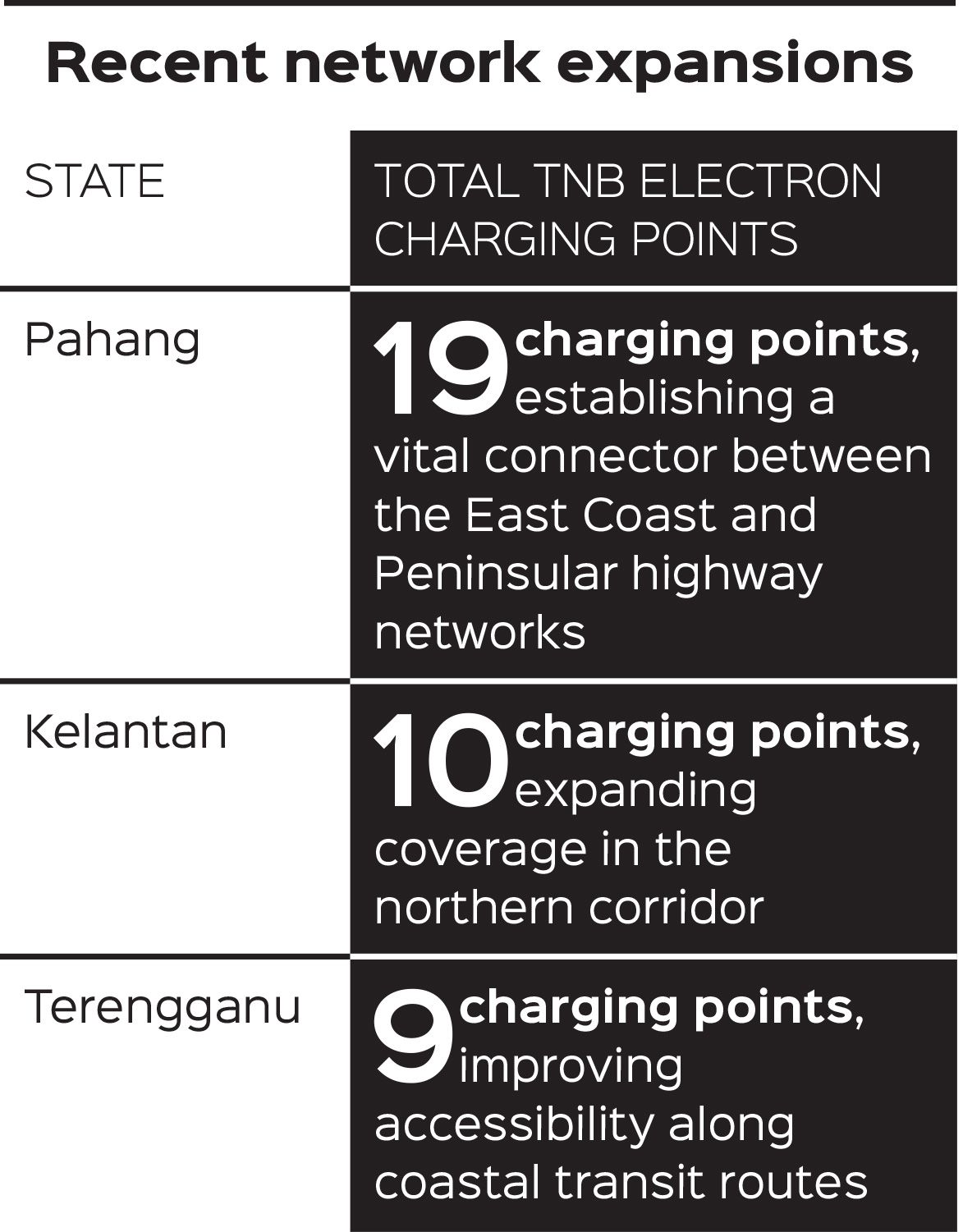
Historically, infrastructure investments were concentrated in high-density urban zones. TNB Electron’s deployment strategy deliberately targets underserved regional routes, particularly along the East Coast, which previously presented significant charging gaps for cross-country travellers.
“Over the years as more people adopt the low-carbon mobility option, range anxiety has been a concern among the new EV drivers. We wanted to remove this barrier so that they are more comfortable and others would be more open to making the switch to EVs,” says TNB Chief Retail Officer Datuk Kamal Arifin A Rahman.
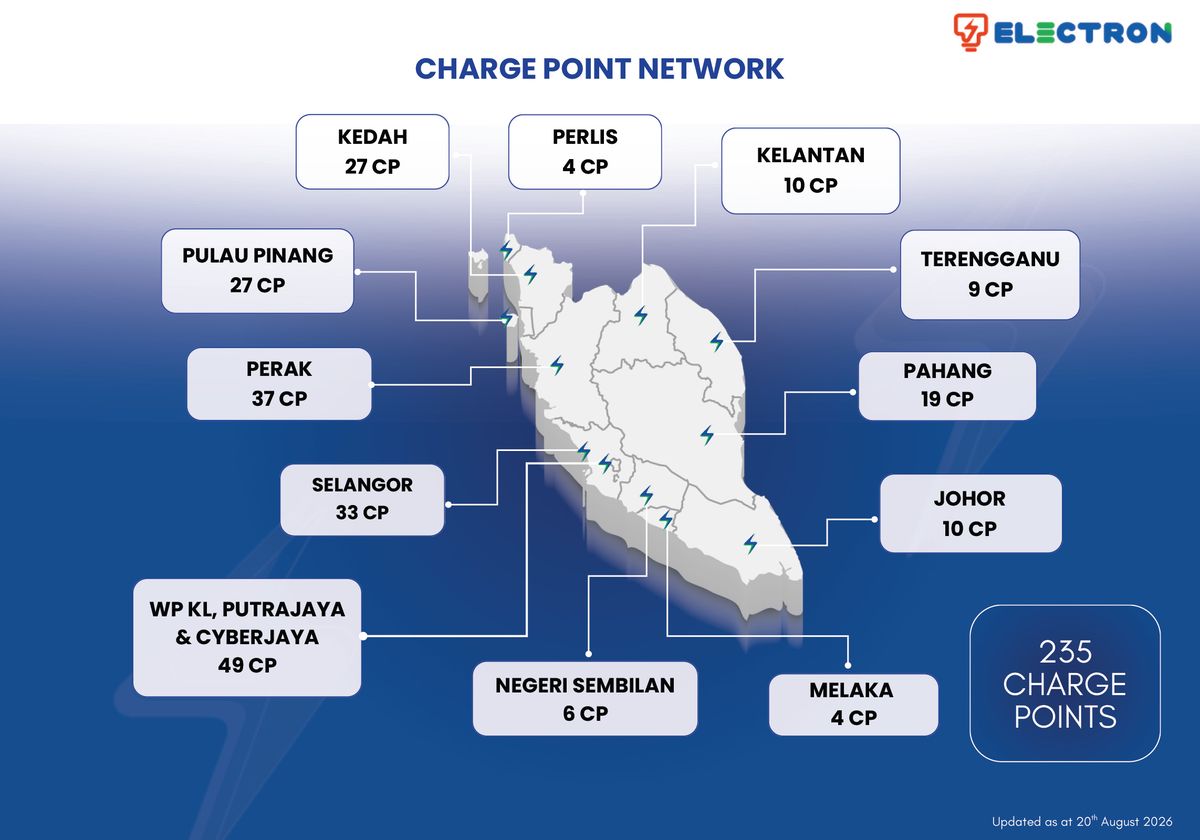
The operational numbers demonstrate the scale of this expansion. As at Aug 20, TNB Electron manages 235 charge points across the country. Of these, 211 charge points are public, accounting for about 90% of the overall network, while 24 are private.
In the EV space, interoperability is what turns a proprietary facility into national infrastructure, says Kamal. Brand-exclusive networks serve specific customer segments but open-access charging ensures that public investment benefits the entire automotive ecosystem and supports widespread driver adoption.
“Taking into account the varied number of EV models on the road, we aim to ensure that the EV charging point network is inclusive with no one left behind.”
While these regional networks continue to develop, their presence bridges key gaps in interstate BEV travel.
Simultaneously, high-volume commuter zones maintain high charger density. As of August, the Wilayah Persekutuan Kuala Lumpur and Putrajaya cluster leads the nation with 49 charging points, addressing high daily urban mileage. Perak follows with 37 charging points, serving as a primary transit corridor connecting the central region to northern industrial and tourism hubs.
Integrating charging into daily routines
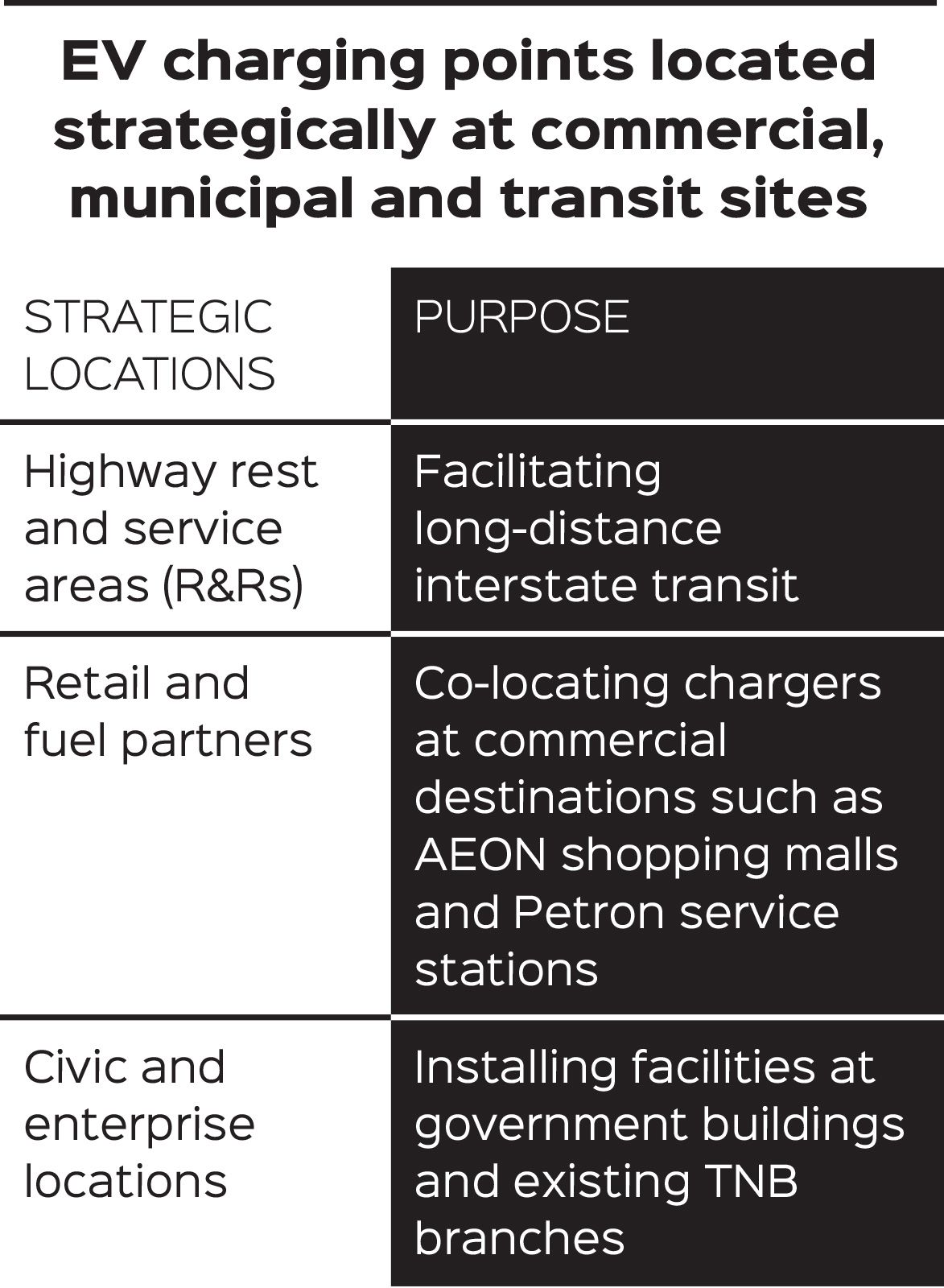
Beyond total charger count, site selection plays a central role in network utility. Rather than requiring drivers to make standalone trips solely to recharge, TNB Electron places facilities where daily consumer activities already occur.
Embedding charging options into locations where motorists eat, shop or conduct administrative tasks integrates EV charging into routine schedules, aiding the broader adoption of electric mobility.
However, expanding a national charging network requires efficient power supply processes and regulatory coordination. To support third-party charge point operators and accelerate overall deployment, TNB has streamlined its supply connection workflow.
Kamal says the impact of TNB’s Green Lane Supply Connection framework for EV charging stations is that contractors, consultants and property developers experience reduced processing times for power supply applications.
For standard capacity applications ranging from 61kW to 240kW, it takes 21 days and for higher-capacity installations requiring between 241kW and 850kW, it takes 55 days.
“Historically, securing high-voltage supply connections — especially when requiring a dedicated electrical substation — could take between three and 12 months. TNB’s expedited processing timeframe applies directly to utility-side technical evaluations and supply connections, excluding third-party approvals such as Energy Commission licensing, landway leaves or local authority permits,” he says.
“In addition, TNB reduced upfront capital requirements for charging point operators’ projects by lowering required security deposits by about one-third compared to standard commercial premises. This structural change allows operators to optimise working capital based on actual electricity usage patterns.”
Multi-agency alignment to reach 2030 targets
Achieving Malaysia’s target of 30,000 EV charging points by 2030 requires close coordination across government agencies and infrastructure providers. Since 2024, TNB has worked alongside key stakeholders — including PlanMalaysia, the Energy Commission, Malaysia Productivity Corporation (MPC), PLUS Malaysia Bhd and local authorities — to standardise regulatory, technical and safety guidelines for Peninsular Malaysia, ensuring the EV ecosystem is in place to foster low-carbon mobility adoption in the country.
“To support the national goal of 30,000 chargers by 2030, TNB will continue to render technical and operational assistance throughout the end-to-end supply process,” says Kamal.
“TNB Electron chargers play a key role in addressing range anxiety at critical transit points, helping build a reliable foundation for low-carbon mobility across the nation.”
From an environmental, social and governance (ESG) standpoint, expanding EV infrastructure yields two distinct benefits, says Kamal, the first being equitable infrastructure access.
“Sustainable infrastructure development requires regional inclusion. Expanding charging networks to cities like Kota Bharu or Kuala Terengganu ensures that vehicle electrification options are available outside major economic centres,” he says.
It also accelerates emissions reduction, he adds, as addressing range anxiety removes a primary barrier to EV adoption in non-metropolitan areas.
“Providing reliable cross-country charging options facilitates broader market transition beyond early adopters,” he says.
“Meeting the 2030 target of 30,000 chargers will require continued coordination and investment. By establishing operational charge points across all 13 states, TNB Electron provides a clear model for nationwide infrastructure expansion: open access, strategic placement and streamlined utility connections.”