


ASEAN is one of the world’s most competitive regions. With an economy approaching US$4 trillion, the bloc’s strong manufacturing base, abundant natural resources and renewable energy potential have positioned it as an important destination for global investment.
As the global transition towards net zero accelerates, the factors that underpin ASEAN’s competitiveness are also evolving, with the carbon intensity of power becoming an increasingly important business consideration.
Companies are facing increased customer and supply chain expectations around environmental and social issues, and are under growing pressure to reduce electricity-related emissions and demonstrate credible transition plans. For manufacturers, exporters, data centres and other power-intensive sectors, electricity procurement is emerging as a strategic driver of competitiveness.
Momentum in Renewable Energy is Accelerating
ASEAN’s policy ambition to decarbonise its power system is gathering pace: eight ASEAN member states have made commitments towards net zero emissions or carbon neutrality. The challenge now is delivering those ambitions while meeting the needs of a rapidly expanding power system. ASEAN electricity consumption has already increased ninefold since 1990 and is projected to grow by 3–4% annually through 2040. The region therefore must strengthen energy security, while preserving affordability and accelerating environmental sustainability.

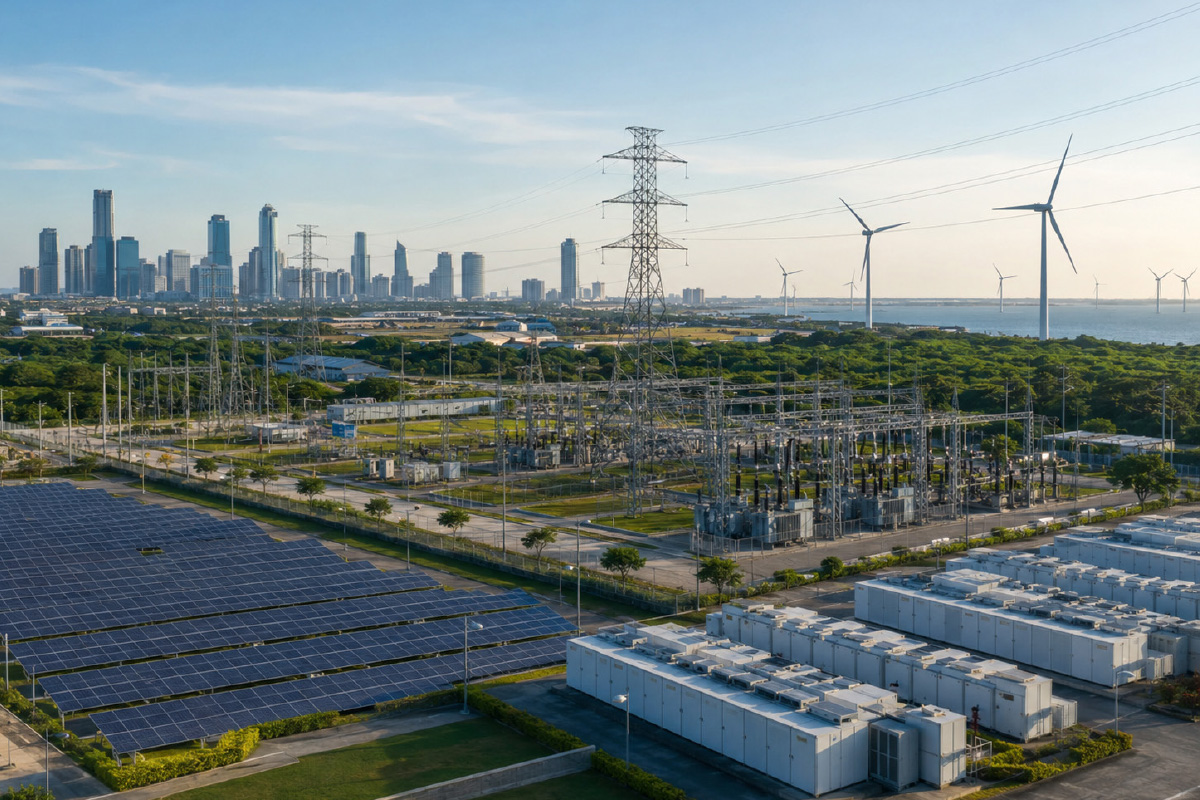
Progress is already underway, with ASEAN countries investing significantly in renewable power generation. Solar PV and wind installed capacity exceeded 45 GW in 2024, up from 4 GW in 2015. Under today’s policy settings, ASEAN’s total generation capacity is expected to more than double by 2040, with renewables accounting for around 75% of new capacity additions.
But Grid Readiness Must Scale with Renewable Momentum
However, expanding renewable energy generation is only part of the solution. Renewable resources are not always located where the electricity demand is, and clean power still needs to move through networks that can absorb and deliver it reliably. In Malaysia, the National Energy Transition Roadmap (NETR) recognises that grid limitations must be overcome to accommodate higher renewables penetration, and identifies transmission, distribution storage and policy reforms as critical enablers.
This makes grid readiness more than just a technical consideration — it is one of the core enablers of ASEAN’s ability to decarbonise while maintaining energy security and affordability. Stronger networks, storage, demand response and power system flexibility can reduce the amount of renewable energy that goes unused because the grid cannot absorb or deliver it, while improving system resilience and lowering overall costs.
The case for stronger grids extends beyond national borders. The ASEAN Power Grid initiative was conceived to connect national power systems and enable cross-border electricity trade. The International Energy Agency (IEA) estimates that ASEAN will need more than US$300 billion to expand and modernise electricity grids between 2025 and 2040, including around US$27 billion for cross-border interconnectors.
Execution is Now the Differentiator
While ASEAN’s renewable momentum and grid investments are encouraging, these alone will not determine the region’s success. Execution will. The harder question now is whether ASEAN can deliver projects at the speed, scale and coordination required. As discussions at Tenaga Nasional Berhad’s Energy Transition Conference 2026 underscored, deployment at scale requires the coordination of infrastructure, institutions, markets and financing so that plans can move from concept to implementation.

For governments, regulators and market participants, the priority is to translate ambition into investable, coordinated projects without compromising energy security or affordability. This will require effective market design, timely approvals, strong project preparation and robust institutional capacity.
Capital is Necessary, but Bankability Determines Deployment
According to the IEA, aligning with announced climate pledges would require clean energy investment in Southeast Asia to rise to over US$190 billion by 2035 — around five times today’s level. The scale of the investment required positions banks as both key financiers and strategic partners in supporting industries through the transition.
The challenge, however, is not only capital availability but capital deployment. Capital does not automatically flow to projects; it flows to projects that are bankable and supported by clear plans. In many Southeast Asian markets, relatively higher financing costs, perceived project risks and regulatory uncertainty can make it harder for projects to attract investment, even where the long-term need is clear.
Blended finance can help bridge this gap, but only when it is used to address specific risks that commercial markets cannot yet efficiently absorb, rather than as a substitute for sound policy and project structures. By combining concessional capital from governments, development finance institutions and climate funds with commercial financing, it can improve project viability and help crowd in private capital. Clear risk allocation, transparent contractual frameworks and credible long-term revenue models remain essential, particularly for higher-risk or more complex transition projects — such as green hydrogen, geothermal development and regional interconnection projects — where commercial lenders and investors may require additional risk-sharing mechanisms before committing capital.
What Businesses Should Do Now
The energy transition will require action across the entire ecosystem, with different priorities for different stakeholders. For power-sector players, the priority is execution discipline: building stronger project pipelines, improving project preparation and clarifying revenue models.
Banks and financial institutions also have an important role to play. Beyond financing renewable energy, grids, storage and transition-enabling infrastructure, they can provide transition advisory and help clients structure financing around measurable outcomes.
CIMB’s GreenBizReady™ is one example of how capability-building can help SMEs and MSMEs take practical transition actions, including emissions measurement, energy efficiency improvements and renewable energy adoption. By linking advisory support, capacity building, digital tools and solution partners with sustainability-linked financing, including rebates tied to achievement of decarbonisation targets, such programmes can help smaller businesses strengthen their transition readiness as customer, regulatory and market expectations continue to increase.
Ultimately, energy transition readiness is not only an issue for the energy sector. For the wider economy, the task is to treat energy transition readiness as a strategic issue, especially for carbon-intensive sectors and companies exporting to developed economies. This means understanding future electricity needs and energy costs, assessing power reliability, improving energy efficiency, electrifying operations, and developing clear renewable energy procurement and decarbonisation plans.
From Transition Readiness to Competitive Advantage
ASEAN does not lack competitiveness, renewable resources or transition ambition. What will matter now is whether the region can turn this momentum into secure, cost-competitive and lower-carbon power at the speed and scale that businesses and economies demand. This will require grids that anticipate demand, projects that are bankable, financing that is structured around real risks, and businesses that understand their future energy needs before constraints become binding.
For Malaysia’s businesses, the message is clear: the energy transition is no longer simply an environmental consideration — it is already becoming a critical element of competitiveness. Those that prepare early — by understanding their energy exposure, strengthening decarbonisation plans and signalling demand for lower-carbon power — will be better positioned to manage risk and capture opportunities as ASEAN’s energy system evolves.
This article is part of The Cooler Earth Sustainability Series by CIMB. With a regional presence across ASEAN, CIMB has committed to mobilising RM300 billion in sustainable finance by 2030.