

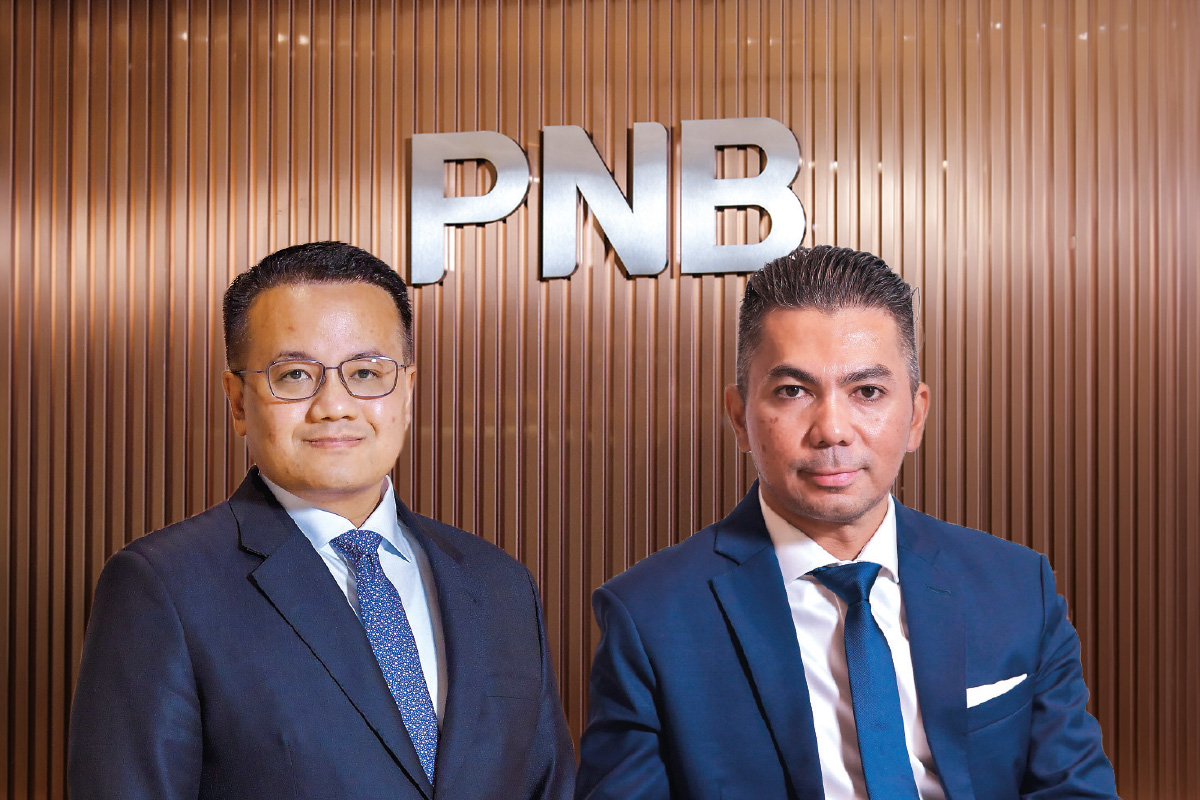
Permodalan Nasional Bhd (PNB) is doubling down on its mandate to deliver long-term returns for millions of unitholders to protect and grow the nation’s savings amid volatile markets to enhance the economic wealth of the Bumiputera community and all Malaysians.
The custodian of Malaysia’s national wealth is targeting assets under management (AUM) of RM400 billion by 2027 and, to get there, is deepening its fixed-income and global asset exposure, moving into private credit and real estate credit, while keeping domestic public equities at its core.
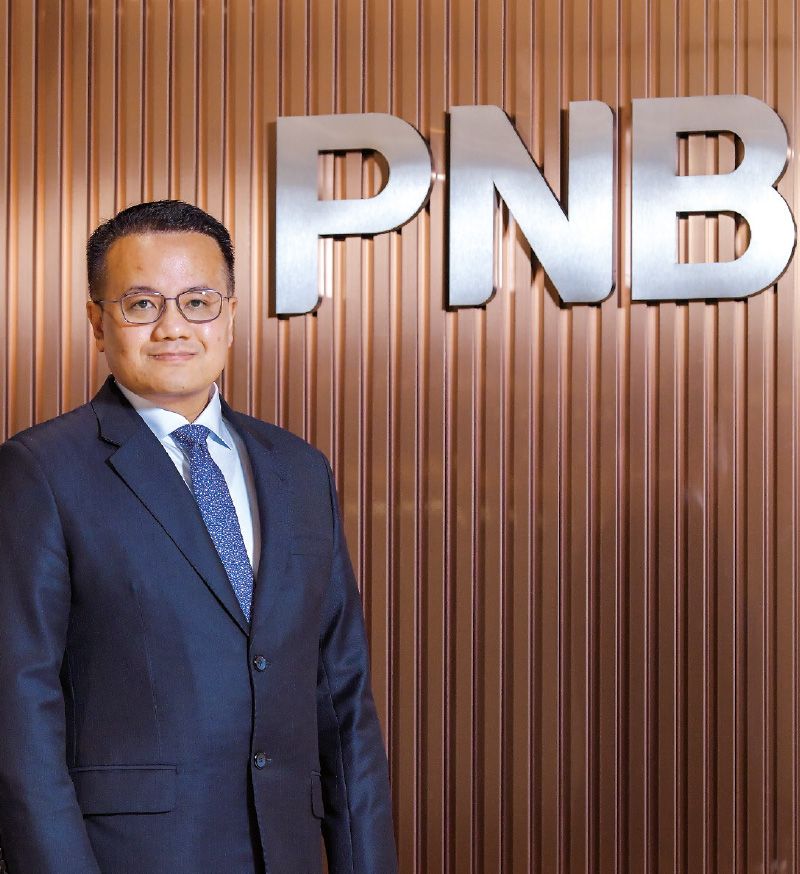
PNB grew its AUM by around 5% in 2025, from RM348.3 billion at the end of 2024 to around RM366 billion by the end of 2025.
PNB’s past decade has been defined by deliberate, disciplined portfolio transformation — broadening across asset classes and geographies to build resilience, sharpen risk management and drive long-term value creation, says Datuk Rick Ramli, Deputy President and Group Chief Executive of PNB.
The results speak for themselves: Over the last five years, PNB has distributed more than RM60 billion to unitholders, including a record RM15.3 billion in 2025.
PNB’s allocation and rebalancing decisions are guided by its Strategic Asset Allocation framework which underpins its LEAP-6 Strategic Plan for 2025 to 2027.
Global diversification was central to that effort. A decade ago, less than 2% of PNB’s assets were invested globally, with the portfolio predominantly concentrated in domestic public equity and virtually no exposure to private investments or real estate. Today, that share stands at 28%, says Rick.
“That’s a big shift and the reason we do this is to diversify the portfolio and manage risk more effectively. With a global portfolio, there are times when emerging markets outperform and times when developed markets do — having that global exposure allows us to balance that risk far more effectively,” he says.
Another key shift has been the expansion into credit — both public fixed income and private credit — across domestic and global markets, with PNB using the asset class to dampen portfolio volatility and deliver more consistent returns over time.

In 2025, PNB’s fixed income allocation — the public credit portion of its portfolio — grew from 9.8% to around 13%, including a 3% slice in global fixed income.
“The reason we are growing our fixed income portfolio is that it provides us with a steady cash yield. Every year we have to pay dividends to our unitholders and fixed income allows us to generate that consistent flow of income,” says Rick, adding that PNB is also venturing into territory it has never explored before — rebalancing away from traditional real estate and private equity into real estate debt and private credit.
“These are things we’ve never done before but they are things we will start to do,” he notes.
Rick highlights the issuance of a US$300 million (RM1.16 billion) exchangeable sukuk, with Gamuda Bhd shares as the underlying asset, as an example of how PNB is leveraging its substantial domestic equity holdings to raise capital for international deployment — with the proceeds channelled into global fixed income.
Another notable development was the consolidation of Ekuiti Nasional Bhd (Ekuinas) into PNB’s books, which has boosted the fund’s domestic private equity exposure.

“We have big ambitions for Ekuinas and domestic private equity. We believe in the concept of a relay race — Ekuinas invests in a company, scales it up and, when they exit, PNB comes in on the public market side,” says Rick.
He adds, “On global private equity, we continue to deploy capital. In particular, we are looking at global infrastructure — we like it because it offers inflation protection; it is long term in nature and it generates steady cash flows. We plan to grow our allocation to global infrastructure, in addition to the credit expansion I mentioned.”
Other asset classes, including private equity and real estate, contribute more modestly at this stage. Real estate makes up 7% of PNB’s total portfolio, with global real estate investments now accounting for 4% of total portfolio allocation and 59% of the real estate portfolio.
“In things like private equity and real estate, you invest over a 7-to-10-year horizon. In the initial years, you don’t get a cash yield but over the lifetime, you get a strong total return. These investments are still earlier in their cycle compared to where we are with fixed income and public equity,” says Rick.
“So the return contribution, at least for 2025 and the last few years, has been heavily skewed towards domestic and global public equity, followed by fixed income. Private equity and real estate will depend on when the portfolio matures.”
PNB continues to play a leadership role in value creation and sustainability
Public equity remains the backbone of PNB’s portfolio, comprising about 64% of total allocation, and is the main generator of returns, both domestically and internationally.
The domestic side, PNB’s bread and butter, holds significant stakes in blue-chip companies such as major banks and other leading counters that provide strong dividend income and capital appreciation.
“If you want to know whether PNB will have a good year, you just look at how the domestic stocks are doing,” says Rick.
The early signs for 2026 are encouraging. The domestic market hit a high of 1,772 points in January — its highest since August 2017 — before retracting slightly to close at 1,733 points on Feb 6, still 3.1% up year to date.
Strong market conditions alone are not enough for PNB. The fund is increasingly taking a more active role in managing its investments, engaging company boards more directly, setting clearer expectations and discussing specific performance targets, says Rick.
The goal is to drive value creation more deliberately, moving away from being a passive shareholder towards one that shapes outcomes.
“What we think fundamentally, for performance to be sustained, is that you need companies’ earnings to be strong. That’s where I come back, ultimately, as an institutional shareholder in a lot of these companies in Malaysia. It’s our responsibility to engage with these companies and say, ‘Hey, please improve underlying performance’,” says Rick.
With this, PNB initiated a more structured engagement process with companies in its portfolio starting in 2025. It wrote to investee companies asking them to calculate and disclose their one-year, three-year, five-year and longer-term total shareholder returns.
Beyond that, PNB requested clarity on what drives those returns, whether through return on equity, earnings per share growth or other metrics.
“Companies in Malaysia have to do well from an earnings perspective because capital — foreign and domestic — is global. If the market here is not attractive, capital will go elsewhere. Whether it’s the banks, the plantation companies or the real estate companies, they have to focus on the drivers of value,” says Rick.
ASNB empowers Malaysians to invest the right way
As PNB works to grow and protect the nation’s wealth, the job of getting more Malaysians to invest falls to Amanah Saham Nasional Bhd (ASNB), its retail investment arm.
Built exclusively for Malaysians, ASNB is already the largest player in its segment, with 13.1 million unitholders and an AUM of RM304.4 billion.
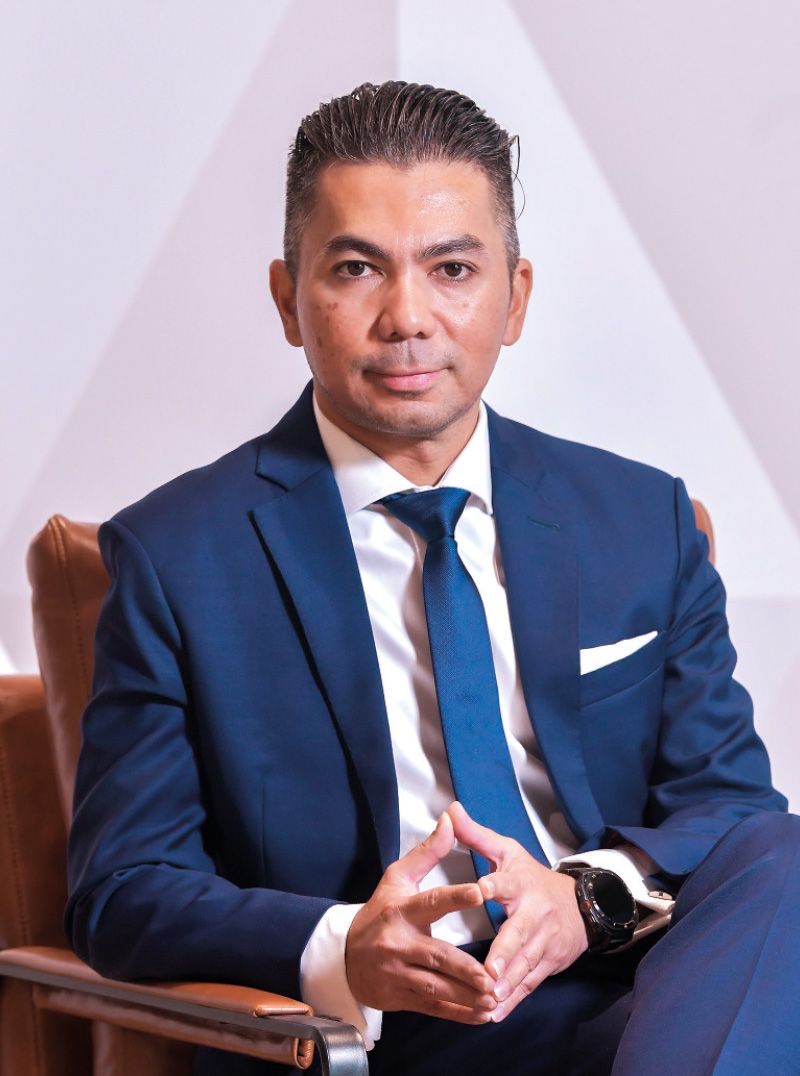
Fadzihan Abbas Mohamed Ramlee, CEO and executive director of ASNB, says the goal is to grow ASNB’s reach from its current 38% of Malaysians to at least 50% of the population. On top of that, existing investors are far from maxing out — the average balance per unitholder is just RM23,000 against Amanah Saham Bumiputera’s (ASB) RM300,000 investment limit.
ASNB’s bedrock remains its fixed-price funds like ASB, which have built their reputation on consistent returns and capital preservation. But Abbas wants investors to think beyond individual funds — highlighting the role for variable-price funds too, from Amanah Saham Nasional (ASN) Equity Global for those seeking international exposure to ASN Sukuk for more conservative, shariah-compliant investors.
“We want people to look at investing as a portfolio solution rather than just buying a single fund. We have 18 funds — six fixed price and 12 variable price — and we want to bundle these together to create a portfolio that matches your return target and risk appetite. Investment is supposed to be simple and intuitive. You don’t need 100 funds on your menu — as long as we cover the right risk profiles, that’s more than enough,” says Abbas.
Abbas also addresses a long-standing concern among Muslim investors around zakat calculation.
“For the longest time there has always been confusion about how to calculate zakat. We worked very hard with the religious authorities to finally get a fatwa on the right method to use — we call it Zakat al-Mustaghallat. People are clear now. Your zakat is purely based on your income. If you take ASB’s 2025 dividend of 5.75% and minus zakat, it’s 5.6% — which is actually very competitive,” says Abbas.

“On top of that, we are building a zakat deduction feature where investors can opt in so that when we distribute dividends, we have already deducted the zakat and paid it directly to the authorities, and the investors will be given a receipt they can use for income tax relief.”
ASNB’s commitment to elevate customer experience and boost investment culture
Malaysia’s largest unit trust manager is also strengthening engagement through two key channels: physical coverage and digital platforms.
On the physical front, ASNB has nearly doubled its relationship manager headcount to 125 within a year, ensuring more affluent unitholders receive the personalised advisory coverage they need. “We are pushing for equality of experience between our branches and our digital platform — whatever you can do at a physical branch, you should be able to do digitally as well,” says Abbas.
On the digital side, the myASNB app now has 4.3 million active users, with about a third of all sales transactions conducted online.
For younger investors drawn to digital platforms, ASNB’s Robo Investment Advisory (RIA) platform allows users to set their preferred return targets and risk levels, after which the system recommends a matching portfolio.
This year, ASNB is also adding greater flexibility, allowing investors to toggle their exposure within individual funds and asset classes, rather than being locked into a fixed allocation.
Liquidity is another lever. Online redemptions have long been capped at RM2,000 a month but ASNB is raising the limit to RM5,000 in March, with the potential to go higher — recognising that flexibility is increasingly important, particularly for younger and more affluent investors, says Abbas.

Beyond that, ASNB is introducing products and features designed to broaden its appeal. ASNB COVR, an investment-linked takaful product offered in partnership with Takaful Ikhlas Family Bhd, provides coverage of up to RM100,000 against death, permanent disability and critical illness, integrating protection with investment for shariah-conscious investors who want both growth and security.
ASNB is also moving towards purposeful investing through goal-based investment features. The upcoming Target Labur feature will allow investors to set specific financial goals — whether for hajj, a child’s education or retirement — and receive structured monthly investment plans to reach them, with dividends and new investments automatically allocated towards each goal.
ASB financing is a way for Malaysians to begin their investment journey and can be used as a wealth-building tool when investment returns exceed borrowing costs. However, we encourage financing unitholders to maximise returns by retaining their dividends for compounding growth instead of using them for instalments.
“ASB and ASB2 financing are very well known — a lot of people take them simply because the loan interest rate is lower than the dividend rate, so it works like a carry trade. People typically borrow just to build up their investment. But we want to evolve this into what we call goal-based financing, linking ASB financing directly to goals like education and hajj. We are working with several major banks to package financing plans that get investors exactly how much they need — whether for education or hajj,” says Abbas.
“And on our side, we want to create rewards tied to these goals — so when you complete an education-linked financing plan, we give your children an allowance and for hajj-linked financing, an allowance to support your pilgrimage.”
Ultimately, Abbas says the real key is consistency. Investing just RM150 a month — roughly RM5 a day — at a 5.75% return would grow to around RM24,000 after 10 years and close to RM100,000 over 25 years.
This is why financial literacy has been core to ASNB’s mission. Under its “Kita Generasi Labur” movement, ASNB is building that foundation from the ground up. For young children, ASNB Bijak instils early saving habits.
In schools, Kelab Pelaburan Bijak has introduced more than 57,000 students to practical investment concepts. At the university level, Celik Madani — a collaboration with the government — has put RM50 into the hands of more than 130,000 students to kick-start their investing journey.
For the broader public, ASNB runs community outreach programmes and campaigns designed to make investing feel accessible and rewarding. Its “Pandu Impianmu!” campaign gives Malaysians who invest as little as RM500 a chance to win prizes including a BMW, electric vehicles and travel experiences — using tangible incentives to nudge first-time investors off the sidelines.