

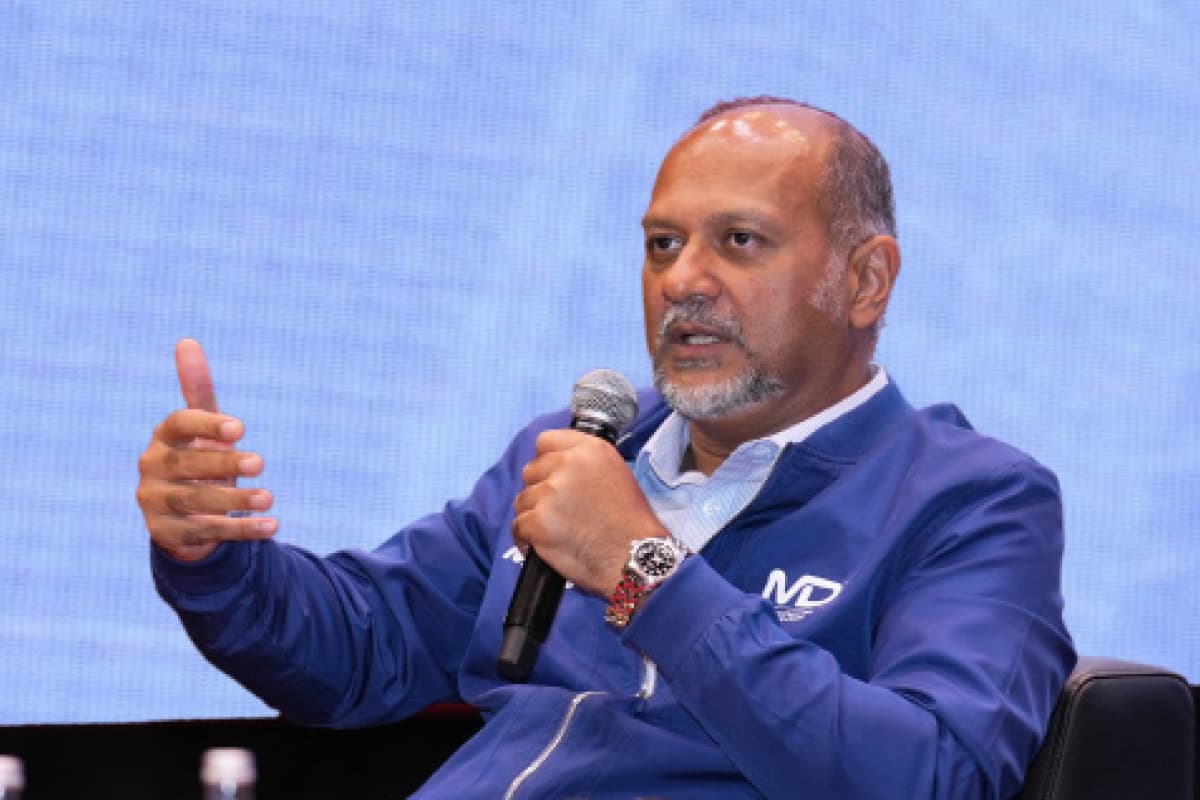

— Digital Minister Gobind Singh Deo
As Malaysia assumes the chairmanship of Asean in 2025, the country aims to position itself as a digital economy leader in the region by championing inclusive growth, sustainable progress and meaningful digital transformation.
This is to build a stronger, more connected and resilient digital economy in the region by ensuring that no community is left behind.
“We are committed to guiding the region towards peace, stability and shared prosperity. Malaysia’s vision for Asean 2025 is anchored on the principles of inclusivity and sustainability, reflecting our national MADANI values of sustainability, compassion, respect, innovation, prosperity and trust,” says Digital Minister Gobind Singh Deo.
“Malaysia recognises that Southeast Asia’s goals for economic prosperity and technological innovation can only be achieved if digital growth is inclusive and sustainable. Without this foundation, digital advancements risk being superficial, failing to deliver lasting impact for Asean communities.
“A thriving digital economy must ensure that benefits are distributed equitably, addressing the needs of all segments of society, including the underserved and rural communities,” he adds.
In preparation for the country’s Asean chairmanship, Malaysia is also actively engaged in the Asean Digital Economy Framework Agreement (DEFA), says Gobind. DEFA is expected to open new opportunities for regional investments, enhance market access, streamline supply chains and harmonise digital regulations across Asean. DEFA is projected to unlock US$2 trillion for Asean’s digital economy by 2030.
Malaysia achieved significant milestones in 2024, which span across policy, industry development, investments and talent initiatives that have positioned the country as a digital economy leader in the region.
For instance, Malaysia approved digital investments totalling RM141.72 billion — creating 41,078 job opportunities in the digital economy sector — from January to October 2024. The country also introduced the new Malaysia Digital tax incentive, which is a transformative policy that cements Malaysia’s position as a digital hub.
Malaysia will continue to foster an environment that drives innovation, investment and regional collaboration to remain competitive in the global digital economy, says Gobind.

The five pillars of inclusivity and sustainability
On this front, the country is focusing on five integrated strategic priorities that work together to position Malaysia as the leader in Asean’s digital economy, with a focus on driving innovation, inclusivity and sustainability. These pillars are artificial intelligence (AI) and data, AI cities, cybersecurity, digital games and animation, and govtech.
The key pillars of AI and data as well as AI cities play a transformative role in driving Malaysia’s digital economy, says Gobind. This is because AI and data act as catalysts for innovation by driving automation, efficiency and economic productivity across high-growth sectors such as agriculture, manufacturing, healthcare and finance.
AI adoption also supports the development of a skilled workforce, notes Gobind. This ensures Malaysian talent can lead regional advancements in AI, data analytics and emerging technologies.
The country is committed to building a robust and inclusive AI ecosystem to drive innovation, empower industries and nurture a future-ready workforce. This is where the National AI Office (NAIO) comes in to play a critical role as the central body that drives AI development.
Under Budget 2025, RM10 million has been allocated for NAIO to guide the strategic development and implementation of AI technologies and coordinate the continuity of strategies through the AI Technology Action Plan 2026-2030.
Meanwhile, AI cities are integral to Malaysia’s agenda in improving citizen’s digital experiences while harnessing AI, the Internet of Things and big data to enhance mobility, public transport and public safety, says Gobind. Thus, the creation of smarter and more efficient cities positions the country as a model for urban innovation in the region.
In this stead, Malaysia has launched the Smart City Framework as a guide for cities to adopt smart technologies and sustainable urban solutions. The country has also implemented pilot smart city projects that are aligned with the framework.
For instance, the Urban Observatory in Putrajaya is a platform that collects and analyses data on a broad range of information. Additionally, the Johor Bahru integrated command centre provides a bird’s-eye view of the whole city, which provides the ability to monitor aspects such as traffic, natural disasters and infrastructure.
Moreover, Malaysia will host the Smart City Expo Kuala Lumpur 2025, which is a flagship event that will showcase innovative urban solutions as well as foster collaboration among Asean countries.
“Through these initiatives, Malaysia is laying a solid foundation to position itself as the Asean hub for AI and data innovation, supporting regional collaboration and driving sustainable urban development. These efforts align with Malaysia’s leadership role during its Asean chairmanship, showcasing its vision for a connected and resilient digital future,” says Gobind.
“Malaysia has also made significant progress in developing AI cities as part of its commitment to driving smart infrastructure, sustainable urban planning and enhancing the quality of life for the rakyat."
Becoming a digitally empowered nation
Malaysia Digital Economy Corporation (MDEC) will support the Ministry of Digital in positioning the digital economy as one of Malaysia’s strategic engines of growth as the country assumes Asean chairmanship in 2025, says MDEC CEO Anuar Fariz Fadzil.
To do this, MDEC will empower small and medium enterprises (SMEs) by spearheading the MSME Digitalisation Initiative, which delivers targeted digital solutions based on the digital maturity levels of businesses. This is to ensure these enterprises can actively contribute to and benefit from the evolving digital economy.
Moreover, initiatives like Gateway, Amplify, Invest and Nurture (GAIN) will support Malaysian businesses by providing them with the tools, resources and networks to expand into regional and global markets.

— MDEC CEO Anuar Fariz Fadzil
“By exporting expertise, technology and solutions to neighbouring countries, Malaysian digital companies play a pivotal role in driving innovation and strengthening regional economies. Through these initiatives, Malaysia is reinforcing its leadership in the digital economy while fostering greater regional collaboration and inclusivity,” says Anuar.
“These policies and investments not only position Malaysia as a regional digital hub but also ensure a positive spillover effect across Asean to drive innovation, growth and economic resilience for the region.”
This is why MDEC introduced the Malaysia Digital (MD) tax incentive to attract investments into high-growth digital sectors such as artificial intelligence (AI), says Anuar. This initiative strengthens Malaysia’s position as a regional digital hub.
Currently, MDEC has successfully profiled and onboarded over 700 companies into the MD tech ecosystem, of which more than 80% have acquired MD status, he continues. These companies are driving innovation through high-impact solutions powered by next-generation technologies.
MD is the engine that accelerates the growth of the country’s tech ecosystem within nine promoted sectors and drives digital adoption and opportunities in the digital economy, notes Anuar. This vision also aligns with Asean’s objectives for regional digital integration and economic resilience.
“Profiling remains an ongoing initiative by MDEC, aimed at nurturing and scaling local technology service providers to strengthen Malaysia’s position as a global technology hub,” he says.