

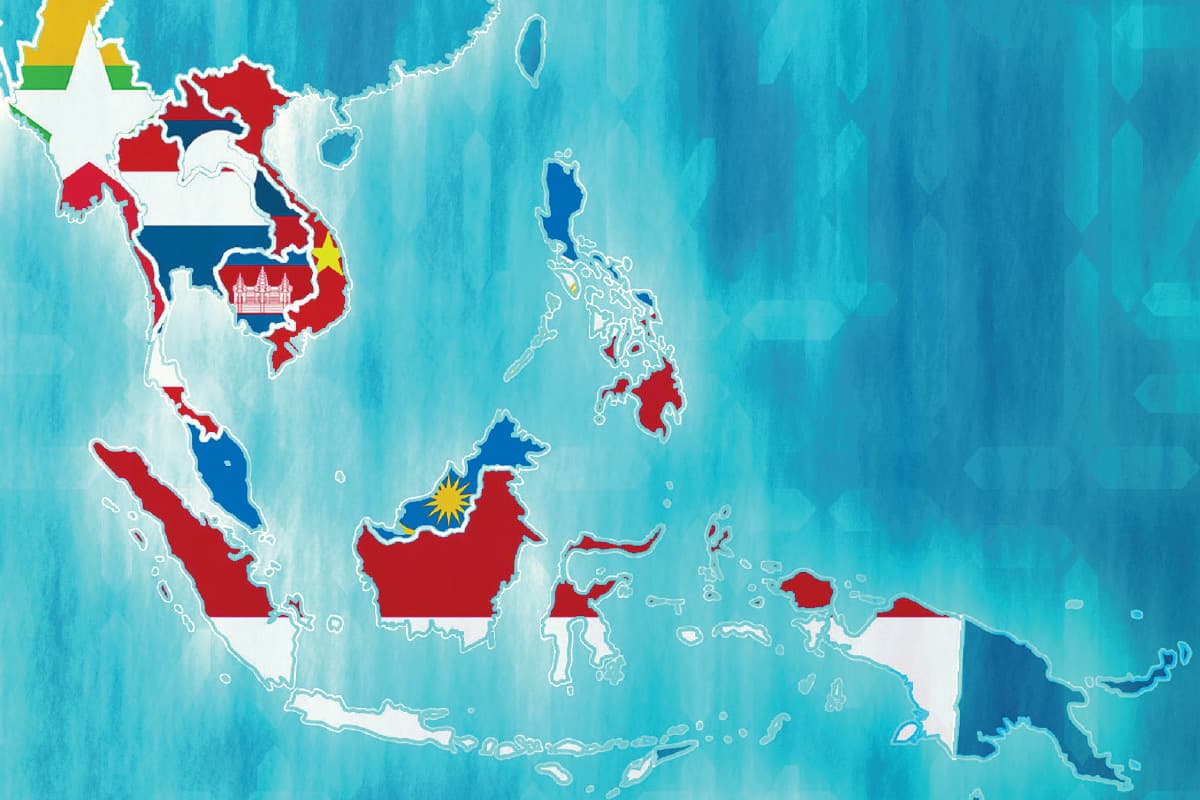

Malaysia’s Asean chairmanship in 2025 presents a significant opportunity to shape the region’s trajectory amid global economic shifts. This is with the Asean Economic Blueprint 2025 envisaging the creation of a highly integrated and cohesive economy that supports high economic growth by increasing trade, investment and job creation.
As one of Southeast Asia’s leading financial institutions, CIMB Group (CIMB) is well-positioned to play a pivotal role in driving regional growth, integration and sustainability. A financial institution with a long-standing presence in the region, CIMB has strong relationships with local governments, large corporations and institutions in various sectors across Asean.
This gives CIMB a strong advantage to support the Asean economic agenda by assisting corporations and its institutional clients to facilitate trade and investment in the region, says Chu Kok Wei, CEO of group wholesale banking at CIMB. With sectorial expertise and geographical coverage, CIMB is able to provide them with seamless and efficient cross-border access across key markets in Southeast Asia through a holistic “one-bank” approach.
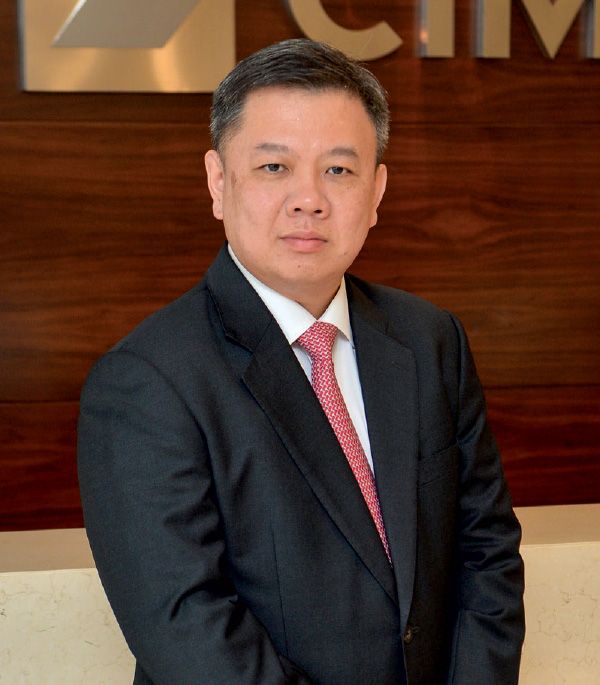
Chu Kok Wei, CEO of group wholesale banking, CIMB Group
Asean trade flows have seen significant growth over the last decade, says Chu. From 2013 to 2023, intra-Asean trade grew at a compound annual growth rate (CAGR) of 2.1%, reaching around US$759 billion, while trade with the rest of the world grew at a 3.7% CAGR, totalling approximately US$2.8 trillion.
During the same period, foreign capital inflows into Asean also rose steadily, growing at a CAGR of 6.7% and reaching nearly US$230 billion in 2023.
In this regard, CIMB will employ a two-pronged approach to support its key clients on their trades, which include intra-Asean trade flows, investments and activities, while assisting foreign multinationals and global financial institutions that intend to invest in the region, says Chu.
“At wholesale banking, we have been supporting our network of large corporations and institutions across the region to enable them to engage in large-scale capital and infrastructure projects. We have also expanded this coverage to support other multinational corporations who are keen to venture into Southeast Asia,” he notes.
The bank’s established network and deep expertise in the region allow them to merge localised strengths and cross-border capabilities to deliver seamless and efficient cross-border solutions to its clients, he adds. This includes relevant trade settlement, financing, investment consulting, capital markets, treasury and global payment services.
For example, CIMB facilitated investments by a conglomerate from Thailand into logistic warehouses in Malaysia, which amounted to RM890 million. Additionally, the bank also facilitated an investment of RM500 million by a real estate giant from Thailand into Singapore’s property sector.
“As our clients navigate the regulatory complexities in their cross-border dealings, we are keen to assist them with their banking needs to support cross-border transactions within the region,” he says.
In terms of mobilising capital, CIMB’s expertise in investment banking has enabled the financial institution to assist investors, corporations and institutions as they take on exposure and investments in key projects in Southeast Asia, says Chu. This has seen a total of US$10.5 billion in capital via the debt and equity capital markets being raised while 2024 saw US$2.3 billion in mergers and acquisitions being facilitated.
CIMB has also been involved in facilitating Southeast Asian regional payments by playing the role of a settlement bank for cross-border transactions that are performed via the QR payment linkage, which have been established in some of the bank’s core markets, namely Malaysia, Thailand and Indonesia.
“As a regional bank with an established network, we have also been playing a key role in connecting local and regional businesses and investors to mobilise capital and funding for business operations or large-scale projects, particularly in infrastructure and technology. Malaysia is used to funding infrastructure projects and thus the bank is looking at using this existing knowledge to structure relevant deals,” says Chu.
“As of now, we have close to RM5 billion worth of deals in the pipeline for the setting up of data centres in Malaysia and have been in dialogues with our clients and investors on other opportunities in the region.”
A long history in the region
CIMB has a long history of collaborating with governments, businesses, institutions and industry associations to facilitate regional financial and trade integration to accelerate Asean’s socioeconomic growth.
For instance, CIMB is a key member of the China-Asean Interbank Association (CAIBA), a consortium of financial institutions represented by China Development Bank and other Asean banks such as Bank Islam Brunei Darussalam Bhd, Laos Development Bank and Bank for Investment and Development of Vietnam.
The objective of CAIBA is to promote connectivity and cooperation between member banks with a focus on sustainable development and investment, mobilising green and sustainable finance, boosting fintech and digital banking transformation, among others.
“Most recently, we have signed a letter of intent with Shanghai Pudong Development Bank, one of the largest joint-stock banks in China, taking our collaboration to the next level, especially in supporting its clients’ investments and business expansion into Asean,” says Chu.

“We will continue to connect and collaborate with bodies that share similar aspirations to facilitate greater networks and exchanges of best practices to drive cross-border initiatives to catalyse Asean’s growth going forward.”
Sustainable finance instruments across bank financings or bonds and sukuk, such as sustainability-linked financing and green bonds, are growing in traction among the bank’s clients, he observes. Sustainability-linked financing encourages corporations to take positive steps to transition into a low carbon economy.
CIMB is committed in its efforts to provide clients with a diverse range of sustainable finance solutions as guided by its Green, Social, Sustainable Impact Products and Services (GSSIPS) framework, an internal taxonomy set by the bank to deliver impactful sustainable finance. The group has surpassed its RM100 billion sustainable finance target ahead of schedule and is currently finalising a new target, which will be announced soon.
Moreover, the bank has also set net zero targets that are in line with the region's sustainability goals. CIMB is the first Malaysian bank to complete its 2030 decarbonisation target setting for high-emitting sectors in pursuit of its broader 2050 Net Zero commitments, which include thermal coal mining, cement, palm oil, real estate, oil and gas, and power.
“CIMB’s leadership in debt capital markets in Southeast Asia and our strong relationship with issuers in the region have enabled us to facilitate capital raising for large-scale infrastructure projects across Southeast Asia, particularly in building transportation networks and energy infrastructure. Some of these issuances are green and sustainability-linked sukuk to fund more environmentally friendly projects aligned with Asean’s sustainability goals,” says Chu.
Through these efforts, we are not only reinforcing our position as a key driver of sustainable finance in the region but also playing a pivotal role in advancing Asean’s broader goals of economic growth, environmental stewardship and social equity. By aligning our strategies with these priorities, CIMB is poised to help shape a more inclusive and sustainable future for the communities it serves and set a benchmark for responsible banking within Southeast Asia, he concludes.