



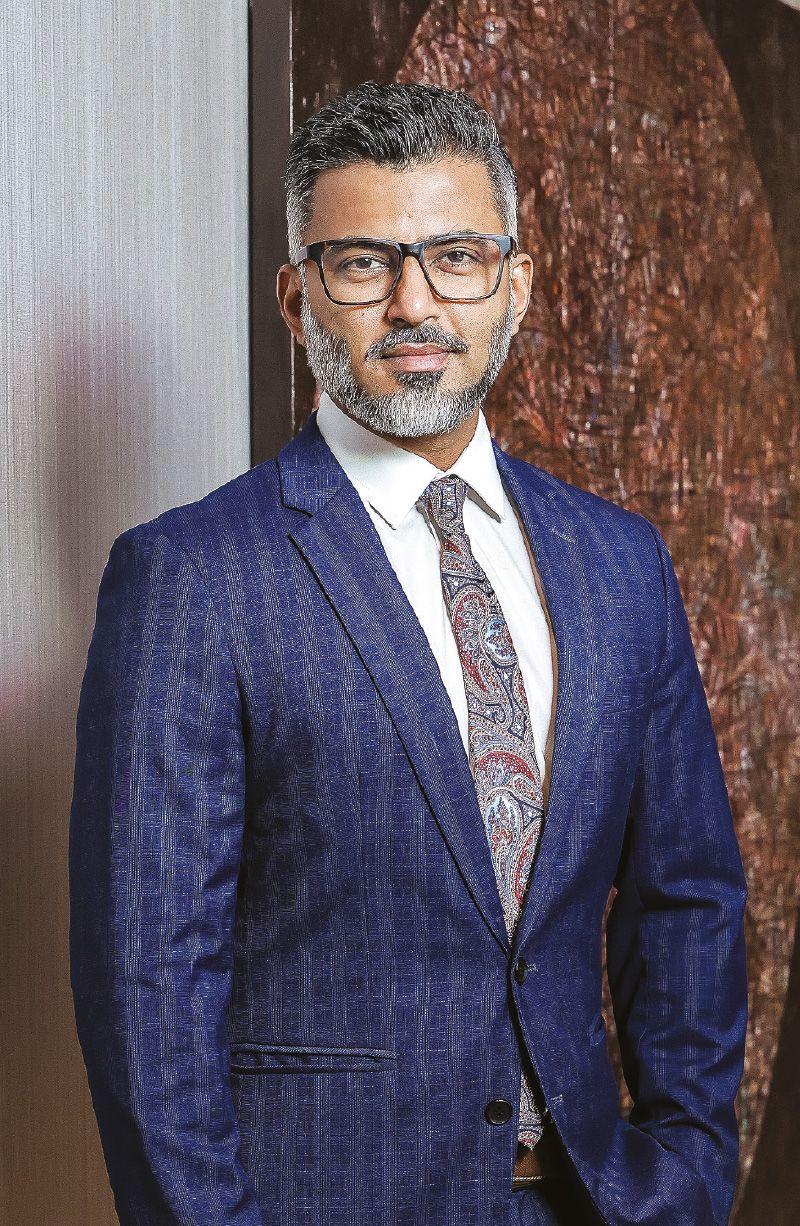
— SP Mohanty, Citi head of services for Malaysia
Across global markets, the shift towards borderless, always-on financial infrastructure is no longer a question of if institutions can build it, but how fast they can do so.
For Citi Services, the answer has been grounded in a deliberate, years-long investment in bank-grade digital asset capabilities, deploying blockchain and tokenisation to build the financial infrastructure for the future. This future will be defined by cash, securities and trade instruments moving seamlessly across networks and continuously across the globe.
Citi Services’ digital assets approach is aimed at solving real client problems, at scale, within a regulated and trusted network. This includes expanding tokenised deposits capabilities, driving interoperability, developing digital asset custody and expanding to tokenised securities, including the issuance of such instruments.
Citi head of services for Malaysia, SP Mohanty shares more as he discusses how Citi is tackling what he calls the “always-on” divide.
“We live in a 24/7 digital economy where you can stream a movie or buy goods at midnight with a single tap, yet much of the underlying infrastructure behind global finance still operates on legacy rails defined by batch processing, rigid cut-off times and weekend closures,” he says.
From experiment to infrastructure
Behind the scenes, Citi has spent the past five years quietly building the bridge between traditional banking and tokenised money, woven directly into its core services architecture.
The approach is deliberate. Rather than leaving corporate treasurers to wrestle with the headache of juggling interoperability between tokenised deposits and everyday fiat, Citi handles the complexities, enabling clients to benefit from an enhanced experience.
Powered by a global network moving around US$6 trillion daily across 180 countries, the bank is working towards making digital assets seamless, secure and practical for mainstream institutional finance, in partnership with fintech firms and leading corporations.
“It is a fundamental transition from an instruction-based financial system to an event-driven, instantaneous one,” says Mohanty.
Cash that never sleeps
One of the clearest examples of that transition is Citi Token Services, which uses a private permissioned blockchain to move tokenised deposits, nearly instantaneously, across borders. The service is live in seven markets (the US, Ireland, Hong Kong, Singapore, the UK, Japan and the UAE) supporting US dollars and euros, and now sees transactions of around US$1 billion a day with prominent use cases in liquidity and working capital management.
The practical implication for corporate treasurers is significant. Liquidity that previously remained idle across time zones, locked in local accounts over a long weekend, or stranded behind a missed cut-off, can be mobilised when and where it is needed.
“Instead of keeping millions of dollars idle in local accounts over a long weekend to cover potential expenses, companies can mobilise their cash dynamically exactly when and where they need it,” says Mohanty.
Bridging banks, not just time zones
More recently, Citi extended this capability further by integrating Citi Token Services for Cash with its 24/7 USD Clearing solution, a move that takes the always-on proposition beyond Citi’s own network and into the broader financial system. The integrated network now connects over 300 financial institutions across more than 50 markets, bridging both Citi and non-Citi accounts and enabling interoperability between digital and traditional finance rails.
The real-world demonstration came on a US holiday weekend, when Citi and Siam Commercial Bank (SCB) enabled PhillipCapital to transfer US dollars from London to Thailand in near real time, crossing banks, time zones and currencies while conventional US clearing systems were closed.
Mohanty likens the traditional process to sending a physical letter from London to Bangkok through a central post office in New York. If the post office is closed for a public holiday, the letter remains there until it reopens.
For banks, this reduces settlement risk and overnight credit exposure because the movement and settlement of money occur simultaneously.
Beyond cash: securities, custody and the tokenised capital market
The always-on imperative is not confined to payments. Institutional clients need their securities and custody infrastructure to move at the same speed as their cash, and Citi is building for that reality.
Citi is extending its custody capabilities into natively digital assets, preparing to go live with bank-grade custody of Bitcoin as part of its broader Custody+ platform, a unified suite covering custody, asset servicing, liquidity, FX, data and market intelligence.
The move follows existing custody capabilities for crypto-linked ETPs and stablecoin reserves, and signals Citi’s intent to serve as a one-stop custodian as institutional clients increasingly allocate capital across traditional and digital assets alike.
In capital markets, Citi has moved early and at scale on the tokenisation of financial instruments. The bank introduced Digital Depositary Receipt, the world’s first tokenised depositary receipts on private shares, with Citi acting as both issuer and custodian on SIX’s blockchain infrastructure. And as the Issuing and Paying Agent across multiple issuances on digital financial market infrastructures, Citi is establishing itself as the leading bank intermediary at the intersection of DLT and traditional capital markets.
Reinforcing Citi Services’ client-led strategy, Mohanty says, “What institutional clients are telling us is that they do not want to choose between the speed and innovation of digital assets and the safety and soundness of a regulated bank. They want both. Our approach to custody is built on exactly that premise as we work to extend the trust and rigour that clients have relied on us for decades into a new class of assets.”
Concurrently, Citi is powering virtual asset firms with the treasury rails and fiat-to-crypto on-ramps needed to bridge modern and traditional finance, a recognition that the client base itself is shifting.
Malaysia and the regional opportunity
Multinational corporations use the country to manage cash across regional operations, while Malaysian companies expanding internationally face the same challenge from the opposite direction: moving money across currencies, time zones and banking cut-off times.
“Malaysia is an indispensable pillar of our regional transaction banking network. Across the Services business, including in Malaysia, we are supporting clients through the evolution of financial markets, moving from a legacy, batch-processing treasury model to an always-on, real-time operating framework,” says Mohanty.
Citi sees opportunities in the region to help companies manage liquidity in real time, with the support of clients across high-volume corridors in the region as early priorities.
Scale is essential to this digital future
The potential is considerable, but adoption remains early.
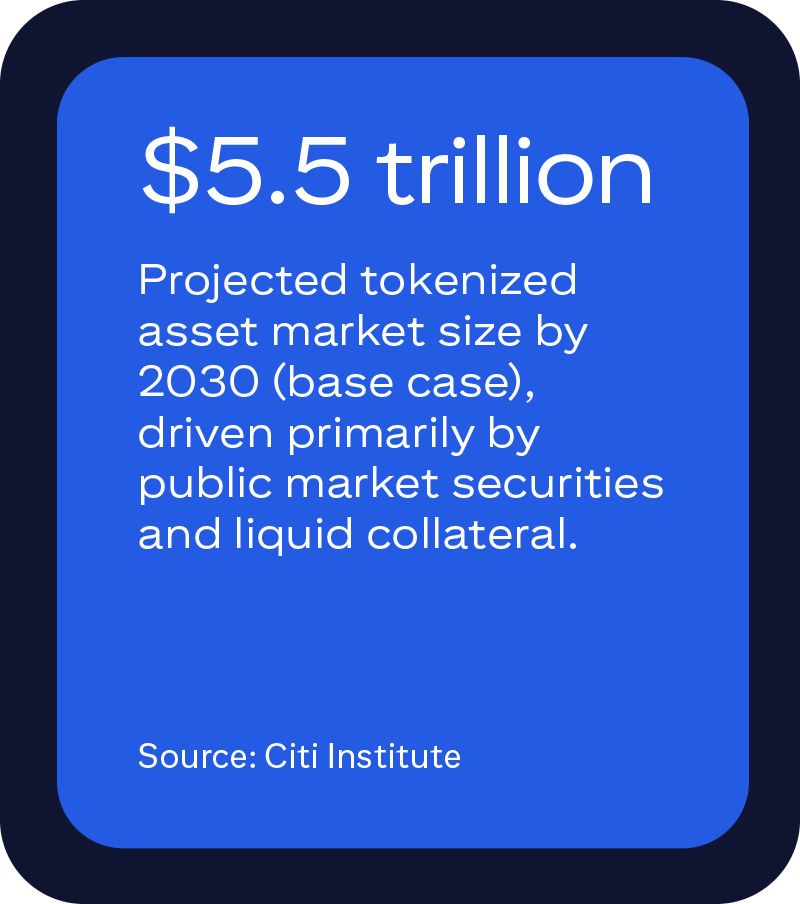
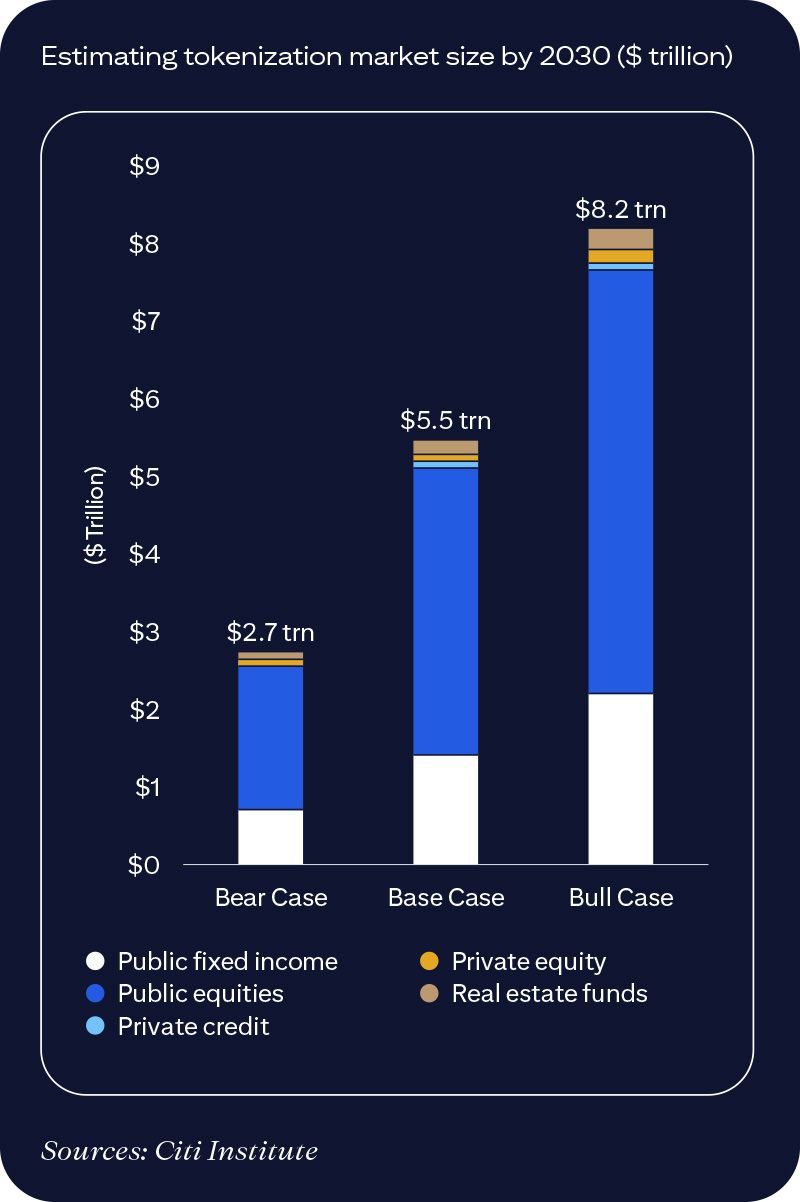
According to Citi Institute’s Tokenisation 2030 report, tokenised financial assets were worth about US$17 billion in April 2026 and could grow to US$5.5 trillion by 2030. The report places the technology at only 1.5 out of 10 on its adoption curve.
“At 1.5 out of 10, we are in the foothills of this mountain,” says Mohanty.
The shift the industry has already made, however, is significant. Banks are no longer debating whether distributed ledger technology has a role in finance. At Citi, that means using its firm-wide Citi Integrated Digital Asset Platform (CIDAP) to connect conventional banking systems with blockchain-based networks — “integration, not isolation”, as Mohanty puts it.
A few challenges remain: cross-border regulatory harmonisation and connecting blockchain networks with the existing financial systems used by corporate clients.
“If every nation builds its own siloed digital walls with limitations on interoperability, we risk replicating the fragmented legacy systems we are trying to replace,” he says.
The measure of success, for Mohanty, is ultimately simple. “When trapped liquidity, for example, becomes a relic of banking history, we will know we have succeeded.”