

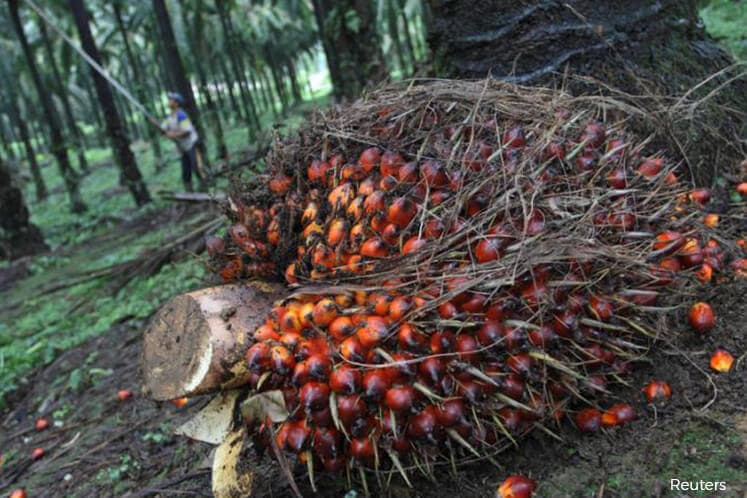
KUALA LUMPUR (July 25): Malaysia has no plans to fix the price of crude palm oil and would allow it to be determined in the open market, said Deputy Plantation Industries and Commodities Minister Datuk Datu Nasrun Datu Mansor.
“If we fix palm oil pricing, it would become a controlled item. We don’t want that to happen, as we want the palm oil sector to remain competitive in the open market.
“Palm oil price is determined by global supply and demand. So, we don’t want to get involved in that process,” he said.
Datu Nasrun was responding to an oral question in Parliament by Kanowit MP Datuk Aaron Ago anak Dagang who called for palm oil to become a fixed price commodity in order to protect smallholders.
Aaron said smallholders in Sarawak were affected by a low price scale for their fresh fruit bunches at collection centres or weighbridges, where they are paid less than RM150 per tonne.
He said the government should also refrain from placing pressure on the farmers to practice prudent farming, just because it is facing the heat from the anti-palm oil campaign in Europe.
He also urged the ministry to build government-run centres and mills for the benefit of farmers, totaling about 500,000 of them in Malaysia, with some 25,000 in Sarawak.
In response, Datu Nasrun said as at June 30, 2017, Sarawak has 81 centres that can process 21.9 million tonnes of oil palm annually, and another seven mills that are in the midst of construction with a production capacity of 1.5 million tonnes.
Altogether, Sarawak mills have been approved to process 23.4 million tonnes of oil palm a year, Datu Nasrun said, adding there is adequate capacity in view of the fresh fruit bunch (FFB) produce.
“Last year, FFB production amounted to 17.9 million tonnes. Between January to June this year, Sarawak mills recorded 9.07 million tonnes of FFB. Therefore, we have no plans to build such mills for smallholders,” Datu Nasrun said.
However, he said the government can consider additional palm oil processing plants, if the factory operator fulfills certain criteria, including owning an oil palm plantation measuring a minimum of four hectares, and is located within 200km of the mill.
Datu Nasrun also advised smallholders to form co-ops that can represent larger FFB volume, in order to fetch better prices at the mills or weighbridges.
“The Malaysian Palm Oil Board (MPOB) is also willing to teach smallholders how to manage their farms and ensure better palm oil grades,” he said.
A check on MPOB’s website showed the reference price for Grade A FFB per tonne at the mill gate today is RM554 per tonne in Miri and Bintulu in Sarawak, and RM546 per tonne in Sandakan, Lahad Datu and Tawau in Sabah. In Northern, Southern, Central and East Coast regions of Peninsular Malaysia, the reference price ranged between RM562 and RM559. Grades B and C are priced lower.
Meanwhile, the October 2017 crude palm oil futures dipped RM17 or 0.66% to close at RM2,533 yesterday, AllianceDBS said in a note today, where it expects the commodity to move lower again with immediate support at RM2,490.