

This article first appeared in The Edge Malaysia Weekly on April 4, 2022 - April 10, 2022
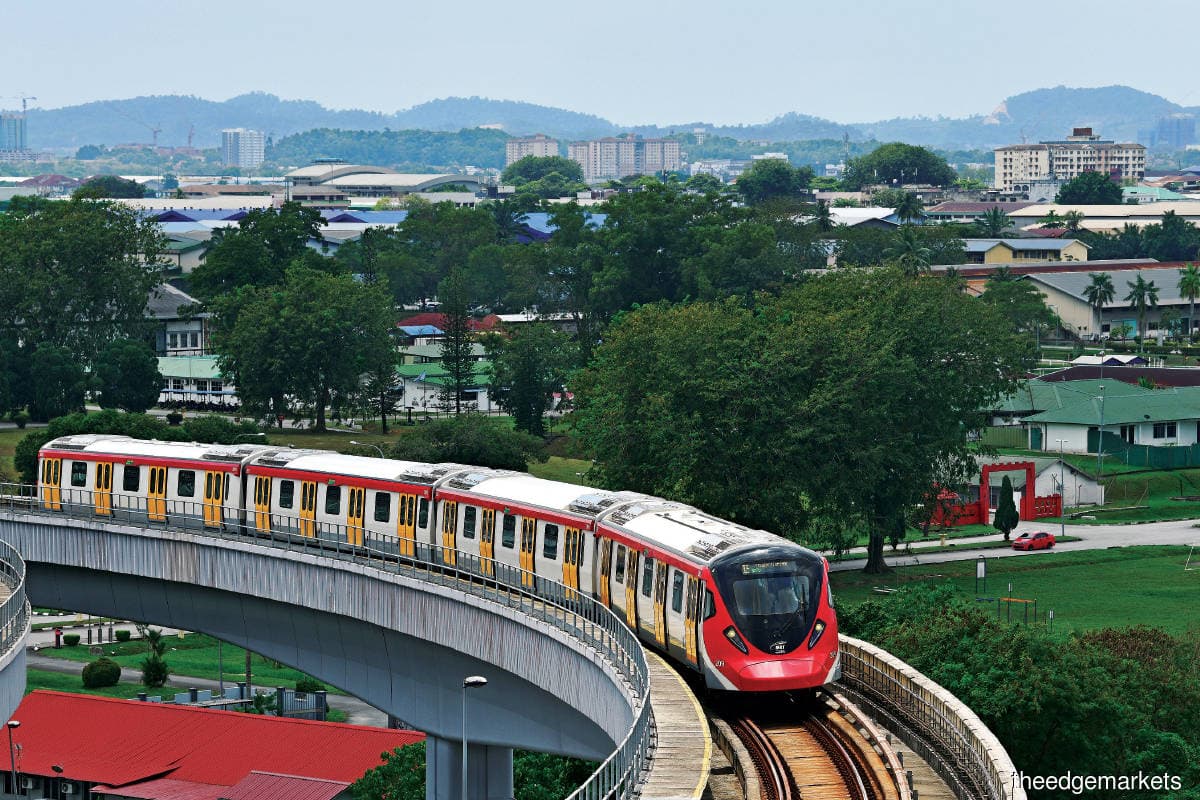
NEWS that the government has given the green light for the construction of the third line of the Klang Valley Mass Rapid Transit (MRT3) was well received by both the construction industry and the proponents of public transport.
For industry players, the RM31 billion construction cost for the MRT3 is a welcome change, as there have not been any big-ticket jobs since the pandemic started in March 2020.
The proponents of public transport, on the other hand, are enthusiastic as the MRT3 (also known as the Circle Line) will bring together much of the Klang Valley’s rail infrastructure, providing a more integrated system for the general public.
The MRT3 is expected to be fully operational by 2030. The project is estimated to set the government back by RM50 billion, which includes land acquisition cost and contingencies, and should take between six and eight years to complete.
In a nutshell, it is a big project that comes with a huge price tag. And this is on top of the RM52 billion that the government has spent over the past decade on other segments of the KVMRT project, not to mention the RM16.6 billion being spent on the third line of the Light Rail Transit (LRT3).
By 2030, when the MRT3 project is completed, the government will have spent a whopping RM118.6 billion to improve the public transport system in the Klang Valley. However, despite the huge sum spent so far, the intra-city rail system has done little to reduce traffic congestion in the Klang Valley.
Fuel subsidy versus rail infrastructure
Much of this failure to reduce traffic congestion is attributed to the government maintaining its fuel subsidy, which has resulted in road transport being inexpensive, with many choosing to drive instead of using public transport.
Under Budget 2022, the government allocated more than RM31 billion for various subsidies, incentives and social assistance. According to Finance Minister Tengku Datuk Seri Zafrul Aziz, the government spent RM11 billion on the fuel subsidy in 2021. With crude oil prices currently above US$100 per barrel, he said the government may have to fork out RM28 billion for its fuel subsidy in 2022 — a huge amount by any measure — if oil prices do not weaken.
To put things in perspective, RM28 billion would provide the government with a whole host of alternatives that could improve livelihoods, spur job creation, reinvigorate the economy and improve the overall competitiveness of the country (see also Infographic on Page 64).

But is the government looking at public transport as an option or as a necessity?
If it is just an option, and the cost of driving is kept low, most people would continue to drive their own vehicles. This means there are no pull or push factors that would lead them to switch to public transport.
So, what are the main objectives of the government in spending billions of ringgit on a public transport system in the Klang Valley, and what exactly does it hope to achieve?
A coordinator for Transit Malaysia, a public transport advocate, says, “The government not having a clear purpose for public transport affects the understanding of what the role of the MRT is. More importantly, it means the government is building the MRT for the sake of building such a system, rather than addressing broader issues.”
He adds that the government mentioned the need to reduce traffic congestion when the KVMRT project was launched. However, the current MRT Line 1 has not met the objectives of having the line or an integrated MRT system.
“This may be repeated for Line 2 if the fundamental issue of how public transport is governed, managed, planned and organised is not resolved. Consequently, people may still find it more convenient to drive,” he says.
If the government’s main objective is to reduce carbon emissions — with more cars on the roads these days (as people avoid taking public transport due to fear of contracting Covid-19) — it cannot be achieved.
However, it could be the case of the government taking gradual measures to encourage people to switch from driving to taking trains.
Still, with the high fuel subsidy bill and the already huge amount of public funds being sunk into the rail transport system, the government should be swift to introduce measures that could nudge up the number of public transport users and discourage the use of private vehicles — especially in areas where public transport is adequate.
No proper fiscal management methodology
The KVMRT project, one of the most expensive infrastructure projects Malaysia has undertaken, came into being after the Klang Valley Economic Transformation Programme (ETP) was launched in the early days of Datuk Seri Najib Razak’s premiership.
Nungsari Radhi, an economist who was once a principal officer at DanaInfra Nasional Bhd (the government entity given the mandate to finance the MRT project), questions the manner in which the government decided to spend more than RM100 billion on MRT lines in the Klang Valley.
“Why, among the competing needs, did we choose to do this? A proper fiscal management methodology and one linked to public finance would have imposed a more rigorous framework,” he points out.
He says that when the government decided to build an MRT system for the Klang Valley through the ETP lab, there wasn’t a clear framework to assess the productive efficiency of such a project (the MRT project versus other means of public transport) as well as allocative efficiency (public transport versus other competing demands for public resources).
Public transport, if done right, could be a massive boost to the country’s economy. According to the National Transport Policy 2019-2030 (NTP), the cost of congestion in the Klang Valley was between 1.1% and 2.2% of GDP in 2016, or equivalent to RM6,144 per person per year.
From a climate change perspective, having an efficient and integrated public transport system would benefit the environment as carbon emissions would be substantially reduced.

According to the NTP, Malaysia’s total carbon emissions of 7.9 tonnes per capita in 2011 is much higher than the 5.4 tonnes per capita average for upper-middle-income countries. And 90% of the carbon emissions in the transport sector comes from land transport, with cars contributing 67%.
All these should be reason enough for Malaysia to build an efficient and integrated public transport network, especially in major urban areas. However, a holistic approach — from funding requirements to first- and last-mile connectivity and system reliability — is needed.
“We believe an efficient and affordable urban public transport system is an important component of a developed and sustainable city. In our past research on urban public transport, we highlighted the importance of ensuring accessible and sustainable bus connectivity, especially for Malaysians in the B40 segment, as well as improving the user experience for urban commuters through better use of open data solutions,” says Ziad Razak, a research adviser at The Centre, a think tank dedicated to centrist thoughts.
A well-designed and well-managed MRT system should, over time, help to reduce dependence on automobiles and reduce carbon emissions across the Klang Valley, he adds. But for these policy objectives to happen, many other things need to be put in place, including a review of the fuel subsidy and improvements to last-mile connectivity.
Yet to achieve targets
In the National Public Transport Master Plan, the government targets a public transport modal share of 40% in urban areas by 2030 and hopes to improve access to public transport in rural areas, as well as enhance connectivity between regions.
For the Klang Valley, the government’s aim was to have public transport achieve a 40% share by 2020 — which clearly has not been met. The last recorded modal share of public transport in the Klang Valley was only 21% in 2018.
According to data provided by the Land Public Transport Agency, the average daily ridership for the urban rail system in 2019 stood at 881,715. For the MRT Kajang Line, the average daily ridership was 204,821 in 2019, compared with the projected average daily ridership of 400,000 when the line was built.
Nevertheless, the numbers also show that the average daily ridership for the country’s urban rail system had increased from 2017 to 2019 — 704,455 in 2017, 799,940 in 2018 and 881,715 in 2019.
It is also noteworthy that the increase in ridership between 2017 and 2019 came about without any reduction in fuel subsidy, meaning that with better connectivity, people do utilise public transport. And if there are measures to discourage the use of private vehicles, rail transport could become even more attractive.
Nonetheless, it is important for public transport systems to reach their intended capacity utilisation, as rail systems are expensive and their operations have to be subsidised by the government if ridership falls short of estimates.
Prasarana Malaysia Bhd, the operator of the urban rail and bus system, bled losses to the tune of RM4.46 billion, on the back of RM530.3 million in revenue, for the financial year ended Dec 31, 2020.
In FY2020, Prasarana had RM2.69 billion in current assets and RM6.74 billion in current liabilities, while its non-current liabilities stood at RM35.04 billion. The group had retained losses of RM46.88 billion and its share capital amounted to RM8.4 billion.
In addition to its public transport operations, Prasarana has property development ventures and a project management and maintenance consultancy.
Interestingly, Prasarana’s revenue for FY2016 came in at RM835.9 million, while its net loss stood at RM2.1 billion. The decline in revenue in FY2020 could be attributed to the Covid-19 pandemic, as fewer people opted to take public transport, and its property developments were at a standstill during the lockdown.
Meanwhile, the government has pumped more than RM12 billion into MRT Corp Sdn Bhd over the last two years for the development of the KVMRT and Johor Baru-Singapore Rapid Transit System. As at Dec 31, 2021, the government had invested a total of RM57.26 billion through MRT Corp.
Encouraging use of public transport
It would seem unlikely for Prasarana to post a profit anytime soon as it is the norm for public transport operators to suffer losses. Nonetheless, its operations should be sustainable, at the very least, with the fares supplemented by the rental of commercial spaces at the stations.
However, the public transport system itself has to be more affordable, efficient and seamless to attract more users.
“Parking charges at MRT stations must be affordable. Affordable MRT fares and savings in travel time will reduce the people’s financial burden and ease the cost of living,” says Lee Heng Guie, executive director at the Association of Chinese Chambers of Commerce and Industry of Malaysia’s Socio-Economic Research Centre.
“It is still relatively cheaper for users to ride the MRT than own and upkeep private vehicles — fluctuating petrol prices, wear and tear maintenance, servicing the car loan; also, a car is a depreciating asset. The implementation of fuel subsidy rationalisation towards a targeted subsidy will increase the petrol bill of owners of private vehicles,” he says.
Lee suggests the implementation of either a congestion charge for entering the city during peak hours, having a high traffic zone, imposing an environmental fee or carbon tax on motor vehicles (with exemptions for electric vehicles) or increasing the parking charges in the city to push for greater usage of the MRT.
Regardless, the Covid-19 pandemic has demonstrated that people are reluctant to use public transport for fear of being in a closed and crowded area, where maintaining a physical distance is impossible.
According to data provided by the Land Public Transport Agency, the average daily ridership of the urban rail system dropped to 431,404 in 2020 from 881,715 in the preceding year. The number fell further to 253,179 in 2021.
With the country entering the endemic phase of Covid-19, a sense of normalcy is likely to return. However, it may take years before public transport usage returns to pre-pandemic levels.
Mohd Afzanizam Abdul Rashid, chief economist at Bank Islam Malaysia Bhd, says, “I think the government should take a few steps back and look at the bigger picture. There have been many developments since the pandemic struck the global economy in 2020 that resulted in companies and businesses being more pragmatic in running their business.
“In this respect, the proliferation of technology has become instrumental in the production process and in improving the productivity level. From the Google Mobility Report, we can see that people continue to work from home and observe that public transport ridership has been low during the pandemic.
“What it means is that there are changes that are already happening and becoming a permanent feature in our economy. It appears that infra spending on IT-related matters would deserve a higher priority compared with physical infrastructure.”
He adds that while physical infrastructure still has its merits, the scale has to be revisited, given that working from home or remote working is expected to be embraced by many employers. “The government cannot be too fixated on physical infrastructure, but rather it has to be pragmatic since the financial resources indicate that the government does not have much room to manoeuvre.”
Save by subscribing to us for your print and/or digital copy.
P/S: The Edge is also available on Apple's App Store and Android's Google Play.