

This article first appeared in The Edge Malaysia Weekly on May 22, 2017 - May 28, 2017
NOT everyone who takes part in pyramid or Ponzi schemes — which usually start off well to attract more investors, but are generally unsustainable and often illegal — loses money.
Without these investors making money, others may not be lured into participating in such schemes. So, these “early bird” investors can be deemed to have abetted in promoting an illegal pyramid scheme.
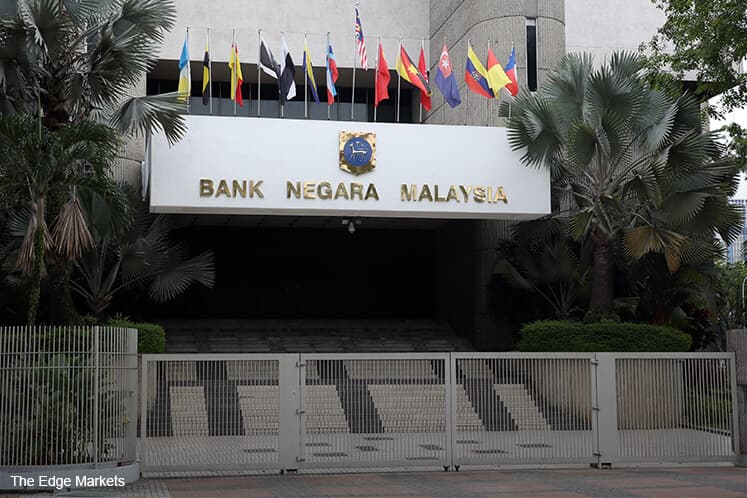
That is why Bank Negara Malaysia will take legal action against members of the public who participate in illegal financial schemes. The maximum penalty is a RM50 million fine and 10 years’ imprisonment — the same as that for promoters of such schemes.
“Some of these people know [something is not right], but enjoy being early birds, jumping from one scheme to another,” says Bank Negara governor Datuk Muhammad Ibrahim.
“We raided [some] premises a few days ago … if there is evidence, we will take [legal] action,” he says, without specifically stating if the premises belonged to JJ Poor to Rich (JJPTR), which is under police investigation. JJPTR drew media attention when news got out that its investors suffered losses after the company shuttered its headquarters, claiming that it lost RM500 million due to a hacking incident.
At a media briefing after announcing the 1Q2017 gross domestic product numbers, Muhammad says efforts to educate the public will continue.
He adds that investors themselves need to be wary of scams or schemes that offer very high returns over seemingly short periods of time.
“Anyone offering a 20% return on investment a month is [too good to be true] … If you look at unit trusts, the returns are generally around 5% to 6%, and these are the best portfolio managers. The very good ones could offer 6% to 7% returns, so any numbers beyond this rate cannot be true.
“The existence of such schemes is also encouraged by the participation of the public, driven by greed and misplaced confidence. If the public stops participating [in these illegal schemes], these schemes will go away.”
The maximum penalty of a RM50 million fine and 10 years in jail matches that imposed on those who unlawfully promote, or cause to be promoted, a pyramid scheme under Section 27B of the Direct Sales and Anti-Pyramid Scheme Act 1993.
However, it has been reported that legal action can also be taken under the Financial Services Act, the Anti-Terrorism Financing and Proceeds of Unlawful Activities Act 2001, the Interest Schemes Act 2016 and the Penal Code.
Muhammad says local financial institutions have closed 238 accounts related to illegal financial schemes after the central bank urged them to assist in the crackdown on related activities.
“We wrote to all the CEOs [of financial institutions], urging them to be stricter in looking at these types of activities and, where necessary, close the accounts. The financial institutions have been quite cooperative in this aspect. They have closed 238 accounts so far,” he says, adding that money in these accounts can be frozen with a court order.
Is going after investors overzealous?
“It may seem drastic, given the individual’s right to make his or her own investment decision, but in the face of scams and dubious schemes, direct government intervention to protect investors remains paramount and justified,” says Yeah Kim Leng, professor of economics at Sunway University Business School and former chief economist at RAM Holdings Bhd.
“The ease of payment via electronic means has inadvertently enabled pyramid schemes to flourish. Once uncovered or suspected, the stoppage of payments and seizure of the accumulated funds before they are transferred elsewhere would be necessary to minimise losses incurred by the victims and prevent the scam from ballooning and causing greater financial losses as well as threatening the stability of the nation’s financial system and the economy.”
To avoid being charged with abetting the operators of such illegal schemes, members of the public are advised against dealing or associating themselves with any illegal financial service provider. They should also not reveal their personal financial credentials to any illegal financial service provider, according to a statement on Bank Negara’s website, which also reminds the public that only licensed institutions are allowed to provide financial services in Malaysia.
Instead, members of the public should report any illegal deposit taking, foreign exchange trading schemes and money service business activities as well as other improper market conduct to the central bank at [email protected].
“Please note that these schemes will fail eventually, when there are no new deposits being continually received by the operators. At such time, the get-rich-quick schemes will collapse and the depositors or investors will lose their investments,” says Bank Negara. Muhammad says illegal schemes usually go bust within 12 months.
Adds the central bank, “At the beginning, the operators are able to use money received from subsequent depositors to pay high returns or repay the principal amount to the earlier depositors.
“However, the operators could not invest the deposits in equally or more lucrative ventures or investments. Therefore, they are unable to sustain the high returns or repayment promised to their depositors.”
Save by subscribing to us for your print and/or digital copy.
P/S: The Edge is also available on Apple's App Store and Android's Google Play.