


(Oct 29): The European Union’s climate chief, Wopke Hoekstra, said talks on new climate finance commitments at this year’s United Nations COP31 summit are “dead in the water” after two years of stalled progress on cutting global emissions.
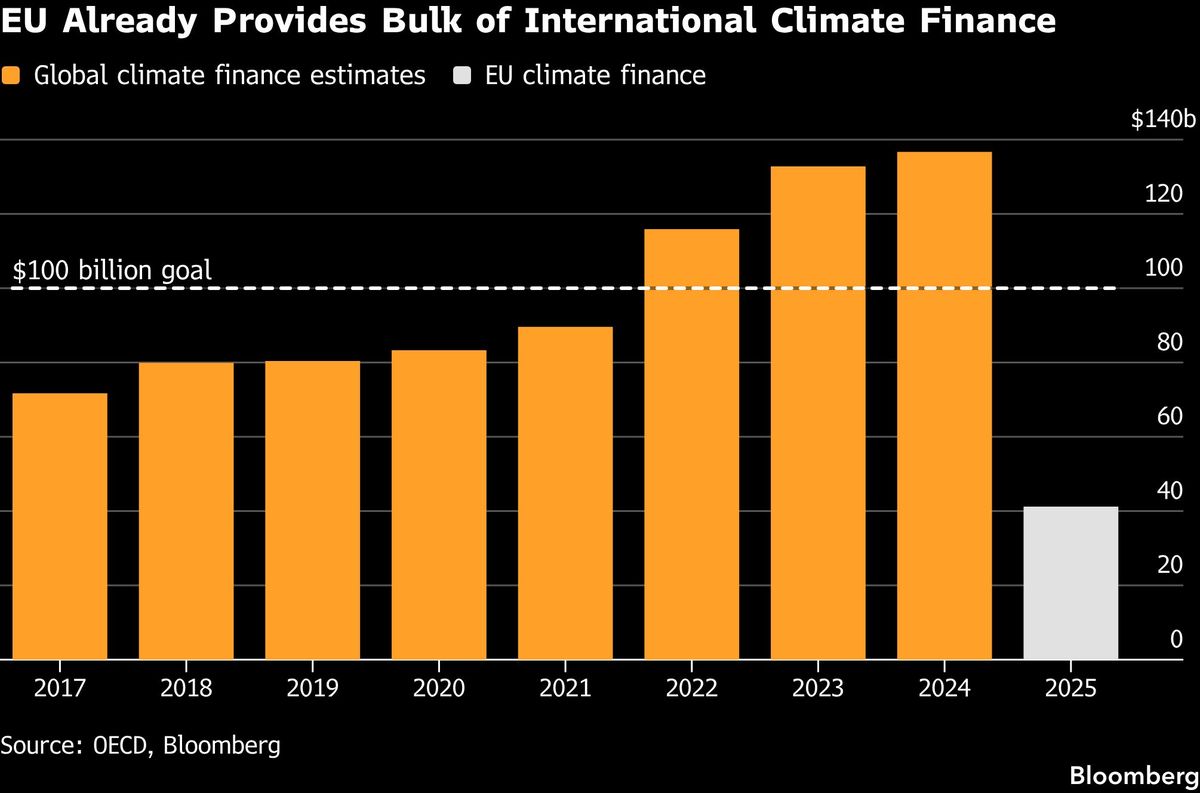
The 27-member bloc is already the biggest provider of climate finance globally, increasing its spending by €5 billion (RM22.7 billion) to €33 billion in 2025, according to figures from the European Commission. But EU officials increasingly feel that other countries are failing to match that financial support with more ambitious emissions-cutting contributions.
“Let’s not fall into the trap to have endless new rounds on financing,” Hoekstra said in an interview. “The problem needs something much more fundamental.”
His comments allude to a key area of tension as almost 200 nations assemble in Antalya, Turkey, on Nov 9 for two-week discussions on how to tackle climate change. The summits frequently expose divisions between developed countries pushing for faster emissions cuts and developing nations seeking financial support to transition to cleaner economies and protect themselves against increasingly extreme weather.
The world is now all but certain to fly past the Paris Agreement’s landmark goal of limiting global warming below 1.5C above pre-industrial levels, according to the United Nations Environment Programme. To achieve even the “lowest possible” overshoot scenario, countries would have to slash emissions by 18% this decade. Even if all national climate plans are implemented, they’d only fall by 6% by 2035, according to a report this week.
Turkey, the host of COP31, has said a key goal of this year’s summit is to secure a global commitment to increase the electricity’s share of final energy consumption to 35% by 2035. Discussions will also take place on extending a so-called mitigation work programme to discuss how best to cut emissions. Brazil, last year’s host, is expected to present roadmaps for transitioning away from fossil fuels and curbing deforestation.
Two years ago, at COP29, developed countries agreed to boost public climate finance to US$300 billion (RM1.22 trillion) by 2035. Last year, countries struck a deal to triple adaptation finance by that date. With the US under President Donald Trump no longer participating in the COP process, much of that burden is set to fall on European nations.
“Any conversation on new fresh money is dead in the water,” Hoekstra said. “At least to the extent that we are the ones who should be providing it.”
That’s a thinly-veiled reference to the likes of China, Saudi Arabia and other Gulf states, which argue that responsibility for providing climate finance should rest with countries that industrialised first.
Hoekstra said that relations with Beijing will remain challenging at COP31. While both sides agree broadly on electrification and the gravity of climate change, there are still questions over China “dumping” clean technologies on the EU and the country’s build-out of coal-fired power stations.
For its part, the Asian nation has fiercely criticised the EU’s carbon border levy, which imposes a charge on imports of certain products from countries with less stringent climate rules.
“There is a range of complications on the table,” Hoekstra said. “It’s a mixed bag at best.”
Uploaded by Evelyn Chan