

This article first appeared in The Edge Malaysia Weekly on October 12, 2026 - October 18, 2026
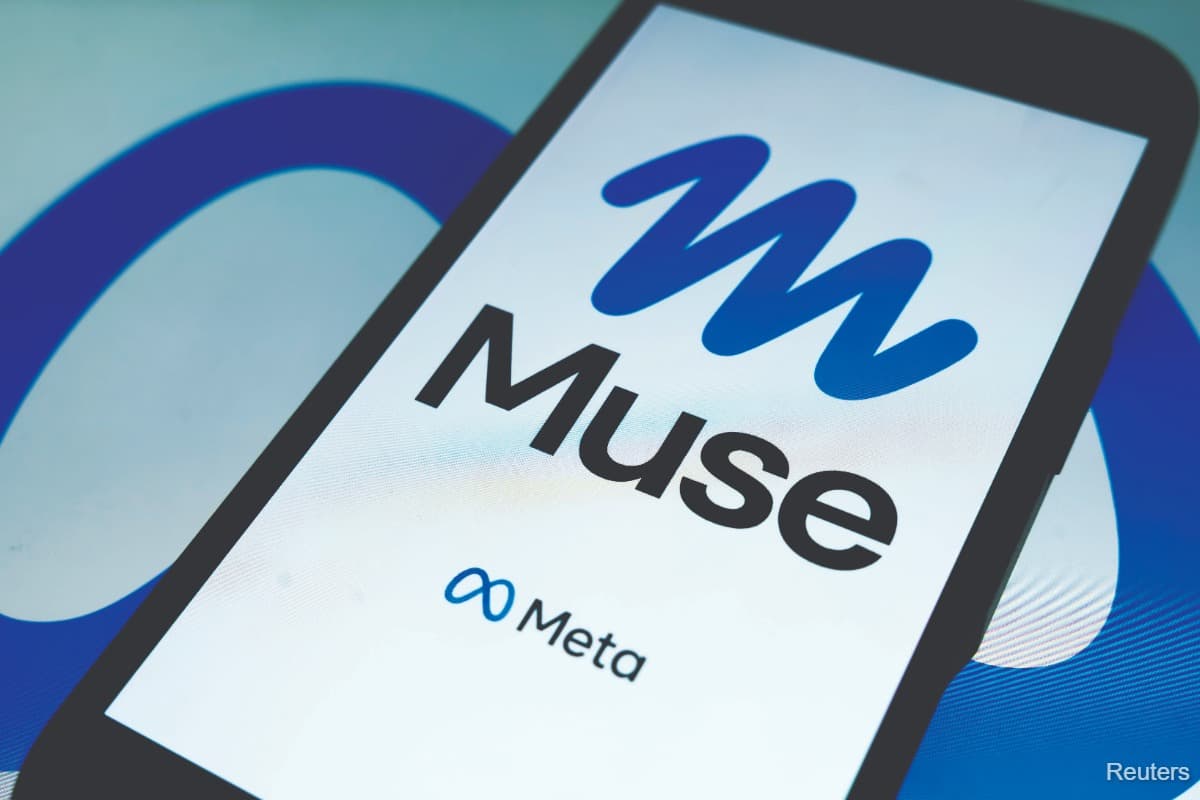
EVERYONE’s gushing over Muse these days. No, not the ageing British rock band that recently released their 10th studio album The Wow! Signal but social media powerhouse Meta Platforms’ new artificial intelligence (AI) agent. Muse, the agent, has taken the tech world by storm since its rollout in early September. It quickly scaled to the top of Apple’s App Store and the Google Play Store charts, triggering what some in Wall Street are calling Meta’s “ChatGPT moment”.
Apptopia, an app-analytics firm, estimates Muse chalked up 642,000 daily active users in the US in its first 12 days, with 2.8 million app installations across iOS and Android platforms. By end-September, over five million people had downloaded Muse, according to research firm Sensor Tower.
Four years after frontier lab OpenAI unveiled ChatGPT in November 2022, AI for people like you and me is finally here. Muse is a personal agent that runs on its own dedicated virtual machine in the cloud rather than on your smartphone’s processor. Moreover, it keeps on working even after you close the app. AI agents, such as Muse, are systems that automatically execute tasks on the user’s behalf. Unlike traditional AI models which operate in isolation and react to predefined inputs, agentic systems can autonomously set goals, plan multi-step processes and execute complex tasks within defined environments. AI agents distribute work across autonomous agents that communicate and collaborate, enabling faster execution, continuous innovation and self-healing networks. Little wonder, then, that they are increasingly becoming ubiquitous on social apps, online workspaces as well as personal devices.
Muse is the latest in a line of personal AI agents that are using AI to automate daily errands to make life easier for all of us. Its biggest rival is a start-up called Instinct, which is currently raising money at a US$10 billion (RM40.86 billion) valuation. Instinct uses messaging apps like Apple’s iMessage and Meta’s WhatsApp to execute digital tasks, run everyday errands, make phone calls through its Instinct Concierge, and manage communication or web-based workflows. It can undertake complex tasks like filing insurance claims on your behalf, or negotiating bills and refunds for you. Its agents can talk directly to each other and coordinate group events by synchronising everyone’s calendars.
Other personal AI agents include xAI’s Grok Bot and OpenAI’s recently launched, always-on Dots agents. Don’t forget iMessage, which Mac and iPhone users use as often as we use WhatsApp. DoorDash, the food and grocery delivery giant, allows users to order restaurant meals and groceries by texting on iMessage. DoorDash has integrated the capabilities of its own AI assistant, which is already in its app, into iMessage. People ordering groceries through DoorDash’s AI assistant average a nearly 50% higher basket value than consumers’ traditional orders. That’s because the assistant suggests items consumers wouldn’t have thought of on their own.
The new agentic AI-led boom comes at a time when the broader AI ecosystem is tackling concerns about safety and governance as the largest frontier lab Anthropic readies a mammoth initial public offering to raise US$100 billion at a US2 trillion valuation next month. Anthropic’s CEO Dario Amodei has called for the slowing down of the rate of AI’s raw capabilities improvement to give risk prevention and safety standards time to catch up.
For now, the focus is the paradigm shift in AI from an experimental phase that began four years ago to an implementation phase as companies move to integrate the technology into their business operations, Goldman Sachs noted in a recent report. A new market beckons as internet platforms like Meta introduce consumer AI agents to help fill online shopping baskets, make travel arrangements and manage calendars, among other tasks. “The virtuous flywheel of agentic tool adoption by consumers and enterprises, competition between public and private AI labs, and limited chip supply will likely keep AI spending robust for the next several years,” Vivek Arya, Bank of America’s tech hardware analyst, noted in a report this past week. He believes it is unlikely that pacing will slow down the massive AI buildout. “Any pacing or addition of safety guard rails to frontier models is likely to increase, not reduce, compute requirements and shift more demand to faster growing inference from training.”
Muse’s capabilities
Here’s what Muse can do for you right now: it can book appointments for you, like a meeting with a business contact or a Saturday lunch with your WhatsApp chat group, watch stock prices for you on exchanges around the globe, or cancel unwanted subscriptions. It can also fill up forms, order groceries from Walmart, electronic goods from Best Buy, cosmetics from Sephora, furniture and home goods from Wayfair, buy tickets to a major sporting event or concert, find you a hotel in Milan or send you news snippets and video clips from all the portals, news sites or Substacks that you follow, and even pay bills.
You talk to it like you are messaging your pal on WhatsApp or iMessage, either in the Muse app or directly in the messaging app you use, and it runs on Muse Spark, one of Meta’s AI models. Essentially, Muse is your personal butler disguised as an AI agent who does little things for you so that you are free to do the big and more important things in life.
Muse is modelled on the open-source agent OpenClaw and Hermes Agent, an open-source autonomous AI agent framework built by Nous Research, as well as agentic start-ups like Instinct, whose agents have been helping users shop, do travel bookings and make subscription cancellations. Like Muse, these open-source programs connect an AI model to your browser and your apps. You can set one up on your own computer, or a rented server, and pay for the AI model.
Here’s how it all works: Meta enables each user with a Linux VM (virtual machine), a software-based emulation of a computer that runs the Linux operating system inside an isolated environment on your physical computer containing a browser and persistent storage, so the agent can act on the open web where no application programming interface, or API, exists. It is powered by Meta’s Muse Spark model family, reachable in the Muse app, on your Mac or PC, on the web and directly inside WhatsApp. A second Meta guard rail, Sentinel, monitors the environment and blocks transaction finalisation without explicit user confirmation.
Unlike Meta’s social media apps such as Instagram, Facebook and WhatsApp, which are free and allow Meta to extract data that it uses to sell advertising, Muse has a freemium model — a free tier to lure users who will then be offered paid tiers, which start from US$20 and go all the way up to US$100 a month. At its launch, Meta CEO Mark Zuckerberg pledged to keep Muse free for “a huge number of tokens”, but stressed that “over time we will profit by taking a small fee from transactions” for free users as Muse grows its mainstay subscription tiers.
Meta owns Instagram, Facebook and WhatsApp, which have three billion users each, and Messenger which has almost a billion. Its family of apps are all free to use. Meta makes 99% of its money from advertising. Its apps relentlessly collect user activity and habits and its algorithms match ads to target groups. Businesses pay Meta when users view or click on the ads displayed on its apps. A business might tell Meta, “We want to show our ad to people in Kuala Lumpur or Penang who love sports and good food and are aged between 30 and 40. Meta then searches its database to find users matching that exact description and places the ad on their feeds. The advertiser gets high-value clicks from potential customers and Meta gets paid for delivering those clicks. Meta keeps investing heavily in technology like AI tools to improve ad targeting precision.
Until Muse’s recent launch, Meta had been struggling with its foray into AI. A latecomer to the AI party, Meta splurged US$72.2 billion on AI-related infrastructure last year. This year, its AI-related spending is likely to touch US$145 billion and the company has indicated it is likely to spend up to US$200 billion in AI capex next year. In April 2025, Meta quickly pivoted when it revealed that its large-language AI model Llama 4 was a disaster. The social media giant spent more than US$14 billion for a 49% stake in Scale AI, brought in its young founder Alexandr Wang as chief AI officer to run Meta Superintelligence Labs, and hired former GitHub CEO Nat Friedman as head of product. Zuckerberg also dropped open source as its core identity. Muse Spark is fully proprietary, allowing Meta to build closely integrated products the way frontier labs OpenAI and Anthropic do.
The issue of trust
Can Muse succeed? That depends on a few things, the most important of which is trust. The AI agent holds all your passwords and payment details, and you need to completely trust the agent before you hand those over. In a recent Oppenheimer survey of 1,500 American consumers, only 8% said they would trust Meta with their passwords, compared with 30% for Google. Moreover, 58% of the respondents said they were unlikely to share passwords with any AI agent. I readily give my credit card details to Apple, Amazon, Netflix, DoorDash and Uber because I buy products, services or subscriptions from them and because I trust them. Would I give my credit card details to Muse or Meta? Probably not.
Indeed, Meta until now hasn’t collected card details because it doesn’t sell anything to users and nobody needs to subscribe to any of its apps. The irony is that its launch came less than two weeks after Meta agreed to pay US$18 billion to resolve US state lawsuits accusing Facebook and Instagram of intentionally addicting children and harming their mental health. Would you give your credit card details to a company that has admitted to such acts?
Muse is currently a free product but unlike WhatsApp, Instagram or Facebook, which are only reliant on ad revenues, Meta needs subscription revenues to make its AI agent a success, because an AI agent isn’t cheap. How many people would be willing to fork out US$100 or even US$20 every month for an AI agent created by a company very few people trust? Jason Helfstein, an analyst for Oppenheimer’s, estimates that Meta would need about 115 million paying subscribers at US$20 a month to generate around US$28 billion a year from Muse. Netflix has 325 million subscribers, most of them on the cheapest US$8.99 tier, which comes with ads.
What would an AI agent like Muse disrupt? Look no further than Wall Street for answers. Shares of companies such as TripAdvisor, Expedia Group, Booking Holdings, Instacart, Planet Fitness and even New York Times fell, though most have since recouped the bulk of their losses. Shares of Planet Fitness and New York Times were beaten down because investors thought Muse would cancel subscriptions, and travel firms were down because of concern that Muse would pick the cheapest fares. Ken Gawrelski, an analyst for Wells Fargo Securities, sees “limited near-term risk to incumbent platforms as the first wave of consumer AI assistants are largely replicating human behaviours across use cases”. Muse and Instinct reportedly recommended the most popular platforms across e-commerce, ridesharing and food delivery, he notes.
Muse is a decent AI agent, but it’s still to early to say whether it will be successful. Six million downloads in three weeks sounds impressive, but the next year or two will show whether Muse can keep its users as well as how many of them will convert to paid plans and whether its massive AI spending, US$145 billion this year and US$200 billion next year, will eventually pay off.
Assif Shameen is a technology and business writer based in North America
Save by subscribing to us for your print and/or digital copy.
P/S: The Edge is also available on Apple's App Store and Android's Google Play.