


This article first appeared in The Edge Malaysia Weekly on December 26, 2022 - January 1, 2023
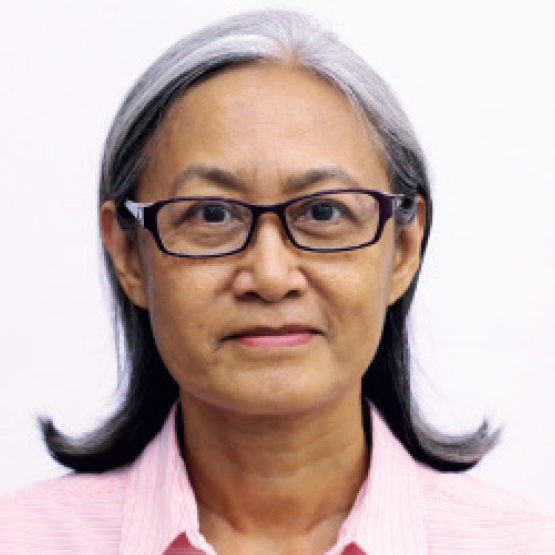
A bird dipped in dark, grimy oil. This harrowing image that Dr Zelina Zaiton Ibrahim first saw in a magazine at age 13 was a defining moment for her journey into environmentalism.
She chose to study environmental science at the University of East Anglia, Norwich, with a government scholarship in 1976. “My main aim was to get to a position where I could do something to change how we interact with the world.”
Zelina remembers that in her final year, the university offered a course called atmospheric science. She was one of three people who took the course. At the end of it, the lecturer asked what she thought of the course. She suggested changing “atmospheric science” to “climate change”.
“Essentially, that’s what they were teaching — about how the changes in the atmosphere in planets and on Earth are causing environmental impacts. I suppose, at the time, I had attended the first climate change course,” she says.
Subsequently, Zelina continued her studies by pursuing her PhD in oceanography at the University of Southampton. As she was bonded with Universiti Putra Malaysia (UPM) due to her scholarship, she returned as a lecturer in 1989, spending the next few decades in UPM’s environment-related departments as a professor, director and head. Currently, she continues to provide her services to the university on a voluntary basis through the Amal Putra scheme.
Obviously, academia has played a big role in Zelina’s journey. “One of the things about academia is that it allows us to question things and find out why this is happening and what’s going on,” she says.
“I think academia gives people the opportunity to be able to ask any sort of question. The question does not need to be relevant or important to society, it just needs to be interesting. Many interesting questions sometimes result in scientific research or findings that are very useful to mankind.”
“In the early to mid-1980s, a lot of progress was made in the environmental field. There was a lot of collaboration between government agencies and academics. Academics provided input to support the government in developing guidelines and policies.”
I think academia gives people the opportunity to be able to ask any sort of question … Many interesting questions sometimes result in scientific research or findings that are very useful to mankind. — Zelina
Making a change
A significant contribution that Zelina made as an academic was by participating in the process of synthesising the Intergovernmental Panel on Climate Change (IPCC) reports. The IPCC is the United Nations body responsible for assessing the science related to climate change.
Thousands of experts volunteer their time as IPCC authors and assess scientific papers to provide a comprehensive summary of the drivers and impacts of climate change, and how mitigation and adaptation can reduce those risks.
“The reports are produced in a cycle of five to six years because you need enough literature over a certain period of time in order to be able to make the assessment. IPCC reports are really assessments of work that have already been done,” explains Zelina.
When she found out that Dr Joy Jacqueline Pereira, a principal research fellow at Universiti Kebangsaan Malaysia and vice-chair of a IPCC working group, was looking for researchers, Zelina jumped at the opportunity. Joy was trying to encourage more Malaysians to be part of the process.
Zelina worked specifically on Chapter 16 of the IPCC report, which details key climate change risks across sectors and regions. Being a part of the team producing the IPCC report presented a particular set of challenges to Zelina. As it was her first time contributing, she had to understand how it worked.
“The thing is you’re working with a multinational group. Some of them have worked together already, so they know how they work. For me, it’s something totally different,” she says.
Zelina, however, had been involved in and led a variety of multidisciplinary groups, which helped her understand how to work with other scientists and experts. Besides that, getting access to literature required for research was challenging. For a lot of scientific journals, payment was required for access. The time taken to source the literature was also a problem.
“I was lucky because I was still associated with UPM, and it had subscriptions for some journals, but not all. So, there were some journals I couldn’t get. The IPCC secretariat tried to assist, but it took a lot of time to get the literature,” she says.
From theory to practical
Zelina believes the research being done needs to have a real-world impact. She was involved in assessment studies that provided her with this real-world connection. It was no longer about ideas but seeing how it translates into use for businesses or the government.
“I think that was a very good learning experience. Some academics only stay in the academic world, working in labs. It’s very distinct from seeing how their work can apply to a working environment,” she says.
“What we found is that it’s only in the last five years that we saw literature that says there is an economic impact. Previously, the risk for financial and economic markets was undetectable.”
Businesses are the web upon which society survives, remarks Zelina. Without work and a livelihood, society would collapse. The companies that are providing these financial, economic and livelihood support need to be aware of the impact of climate change.
“I think it’s very important for companies to be aware and assess for themselves the potential impact of climate change; understand what risks they, their supply chains and networks face; and be prepared to adapt to change, to make themselves and their supply chains more resilient.”
Moving forward, Zelina hopes to continue participating in the discussions surrounding environmental, resources and climate change issues. Moreover, she is focusing on how science can be translated into action, educating people and raising awareness, as well as reaching out to local communities and aiding their response to floods.
Save by subscribing to us for your print and/or digital copy.
P/S: The Edge is also available on Apple's App Store and Android's Google Play.