


TRX shapes a new sustainable urban standard

Beyond a collection of green-certified buildings, TRX has been master-planned as an integrated sustainable financial district, where governance, infrastructure, mobility, nature and digital technologies work collectively to create a resilient, connected and people-centred urban environment.
Sustainability at Tun Razak Exchange (TRX) is not just a promise — it is built into the district’s DNA. From the way it is planned and developed, to how it is operated every day, TRX is designed to balance high-performing business with greener spaces, smarter resource use and a better experience for everyone who works, lives and spends time here.
Set across more than 70 acres in Kuala Lumpur’s new Golden Triangle, TRX shows what an international financial centre can look like when sustainability and people come first: real green infrastructure, lively public spaces, seamless connectivity and future-ready buildings.
Through coordinated district-wide planning and management, TRX supports Malaysia’s sustainability and climate ambitions while contributing to the United Nations Sustainable Development Goals (SDGs), particularly SDG 9 (Industry, Innovation and Infrastructure), SDG 11 (Sustainable Cities and Communities), SDG 13 (Climate Action), SDG 15 (Life on Land) and SDG 17 (Partnerships for the Goals).
District-wide Sustainability Approach
TRX adopts a district-wide approach where sustainability is embedded across planning, governance, infrastructure and operations from the outset. By viewing the district as a single, interconnected ecosystem, TRX coordinates how buildings, public spaces, utilities and environmental resources function together.
This integrated model optimises resource use, reduces infrastructure duplication, improves operational efficiency and supports smarter, long-term decision-making.
This integrated, functional approach is further reinforced by TRX’s growing sustainability credentials, including winning Project of the Year and Low Carbon Landscape Awards at the Malaysia Landscape Architecture Awards 2026, and recognition by Australian Institue of Landscape Architects National Landscape Architecture Awards under the international category.


Sustainable Mobility
At TRX, sustainable mobility is embedded into the district’s design, integrating public transport, walkability and efficient road connectivity. TRX hosts the city’s only MRT interchange, linking the Kajang and Putrajaya Lines and providing access to 64 MRT stations across the Klang Valley and serving more than one million passengers monthly.
Within the district, more than 5 km of pedestrian-friendly streets and walkways make walking a convenient and accessible way to move around while reducing reliance on private vehicles. Connectivity also extends beyond the district through links to six major highways and arterial roads. Approximately 8 km of new and upgraded roads including underground, at-grade and elevated infrastructure have strengthened the surrounding road network and improved traffic dispersal in and around TRX District. These improvements enhance network capacity, reduce traffic waiting times and improve traffic Level of Service in and around TRX, helping to reduce congestion, vehicle idling and associated transport emissions.

This mobility network enables TRX to accommodate growth more efficiently while reducing congestion and car dependency, supporting a more connected, accessible and lower-carbon city center.
Efficient Use of Resources
TRX further strengthens its climate action through renewable energy adoption, climate-resilient infrastructure and circular water management. Renewable energy initiatives help reduce operational carbon emissions, while integrated stormwater and flood-mitigation infrastructure enhances the district’s resilience to increasingly intense rainfall. A dedicated district wastewater treatment plant (WWTP) treats wastewater for reuse in non-potable applications, reducing reliance on potable water and supporting a more circular approach to resource management.
Underpinning these initiatives is the growing use of smart district operations and performance monitoring. Digital technologies and data-driven management enable environmental performance to be monitored, analysed and continually improved. This provides valuable insights into resource consumption, operational efficiency and sustainability outcomes, supporting informed decision-making as the district matures.
What sets TRX apart is not simply the range of sustainability initiatives it has implemented, but how they are integrated into a single, cohesive district model. By embedding sustainability across governance, infrastructure, mobility and the public realm, TRX has created an interconnected urban ecosystem where environmental, social and economic outcomes reinforce one another.
Building The Community
The Exchange TRX provides an easily accessible recycling hub Re-X for mall visitors, and organized KL Sustainability Week to increase education among families and students. TRX holds district-wide recycling campaign, Re:Life TRX Recycling Drive month, that saw participation from 30 companies in the district.
Apart from the concerted sustainability efforts, TRX also works with the community nearby to raise funds for its TRX Ramadan CSR Programme and Kechara Soup Kitchen. The community surau, recently upgraded to TRX Islamic Community Centre (TICC), now hosts over 1500 congregants every Friday prayer, while holding community activities for the public such as Malam Langit, the astronomy class on TRX City Park, and Lakar Khat, calligraphy class open to all.
As the workplace grows, the district becomes more connected, and the community plays an increasingly active role in conservation. In TRX, sustainability is delivered through three layers: district-wide green infrastructure, building-specific standards and facilities, and individual sustainable practices.
Education is the main pillar for TRX’s community building initiative and nation-building efforts, reflecting the commitment to creating meaningful impact beyond the district. Through Santuni MADANI and Sekolah Angkat MADANI programmes, TRX works closely with adopted schools and students to provide support, including upgrades to the library, assembly hall, classroom facilities, as well as Back-to-School programme and year-long SPM intensive tuition.


Green Space and Biodiversity
Equally important is TRX’s public realm, which is designed as critical green infrastructure that enhances climate resilience, biodiversity and urban livability in TRX District. Almost a quarter of TRX are green open spaces, anchored by the TRX City Park and complemented by an interconnected network of pocket parks, plazas and landscaped streetscapes. These green public spaces unite commercial buildings, retail, residences and public transport, creating a cohesive green network for walking throughout the district.
Beyond connectivity, the public realm plays an important environmental role in highly urbanised setting. Trees, layered planting and extensive green spaces help mitigate the urban heat island effect by providing shade, reducing heat absorption from hard surfaces and supporting natural cooling through evapotranspiration. TRX mitigates the concrete jungle effect through extensive parks and plantings, improving the local microclimate.

The district’s aim to bring nature and biodiversity back into the heart of Kuala Lumpur entails over 1,100 inventoried trees from 180 plant species, which in return has attracted 18 bird species to the new urban habitats. Simultaneously, these valuable ecosystem services include carbon sequestration, stormwater management and urban cooling.
These benefits extend beyond the TRX District itself, contributing to the quality of life and environmental comfort to its adjacent urban areas.
A new benchmark for sustainable urban development
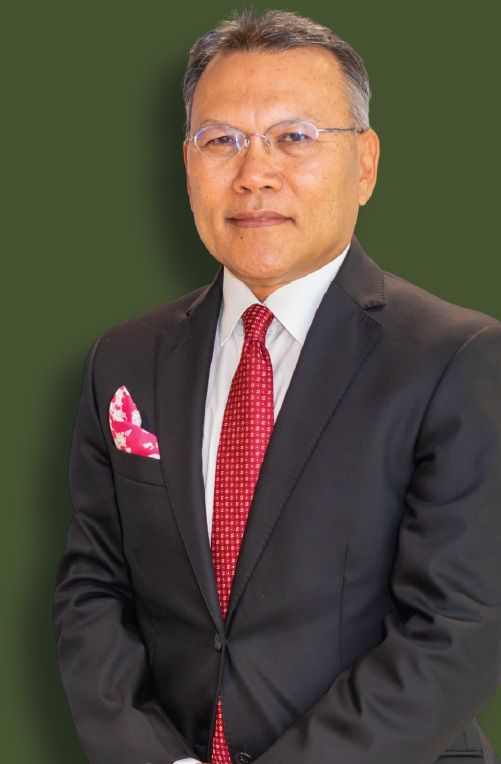
Dato’ Azmar Talib, CEO of TRX City points that as cities become denser and climate challenges grow more complex, sustainable urban development must extend beyond the performance of individual buildings as a whole.
“Through integrated planning, shared infrastructure and connected public spaces, TRX is setting a new benchmark for sustainable urban development in Malaysia.
As the nation progresses towards a low-carbon future, TRX offers a scalable blueprint for creating financial districts that are not only environmentally responsible but also more livable, connected and resilient for generations to come.”, he says.