

KUALA LUMPUR (July 22): Mercedes-Benz Malaysia acknowledged that the waiting period for some of its models stretches as high as six months long now amid supply disruption, coupled with strong vehicle booking as customers rushed to take advantage of the sales tax exemption.
“The biggest challenge that we are seeing for the last few months is actually overall supply chain [disruption] because of the Shanghai [Covid-19] lockdown. Generally, the global supply chains are significantly and severely disrupted,” said Mercedes-Benz Malaysia vice president of sales and marketing Michael Jopp.
“This makes our prediction when we get cars arriving more difficult and it does lead to certain delays in the production process, unfortunately. But I think by now, together with our dealer partners, we have learned to live with that,” he elaborated.
Jopp further said Mercedes-Benz Malaysia continues to engage with its dealer partners so that they could inform customers about the availability of cars as early as possible.
“We are very confident that we are going to be able to meet our projections and also the deliveries that we and our dealer partners have committed to our customers,” he said at a press conference after the launching of Mercedes-Benz’s electric vehicles (EVs) on Friday (July 22).
While Jopp is tight-lipped about its orderbook, he expects vehicle sales for this year to achieve a double-digit growth year-on-year (y-o-y).
Nevertheless, with rising inflation and anticipation of higher interest rates from Bank Negara Malaysia, Mercedes-Benz Malaysia president and chief executive officer Sagree Sardien expects sales growth to normalise to single-digit growth from next year onwards.
“If you look at the Malaysian Automotive Association (MAA)’s projections that go from 2023 up to 2026, you can clearly see growth in the total industry volume (TIV). Our feeling is we follow the same direction.
“We will have challenges such as raw material price increases and inflation at the end. And I think in the end, it will be a matter of it being a single-digit growth versus maybe a much more ambitious growth factor,” she reiterates.
On Thursday, the MAA introduced its Malaysian automotive TIV forecasts for 2023 to 2026. For 2023, the estimated TIV is set at 636,300 new cars, which would be a merely 1% y-o-y growth, as compared to the estimated TIV of 630,000 units for 2022.
This is expected to be followed by 649,030 new cars for 2024, 662,660 units for 2025 and 677,240 units for 2026.
Three EV models for the Malaysian market
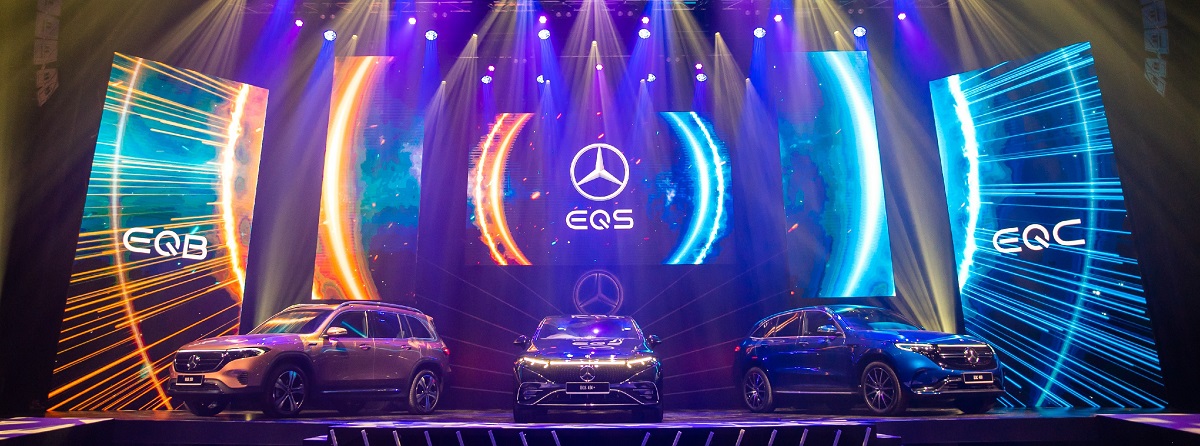
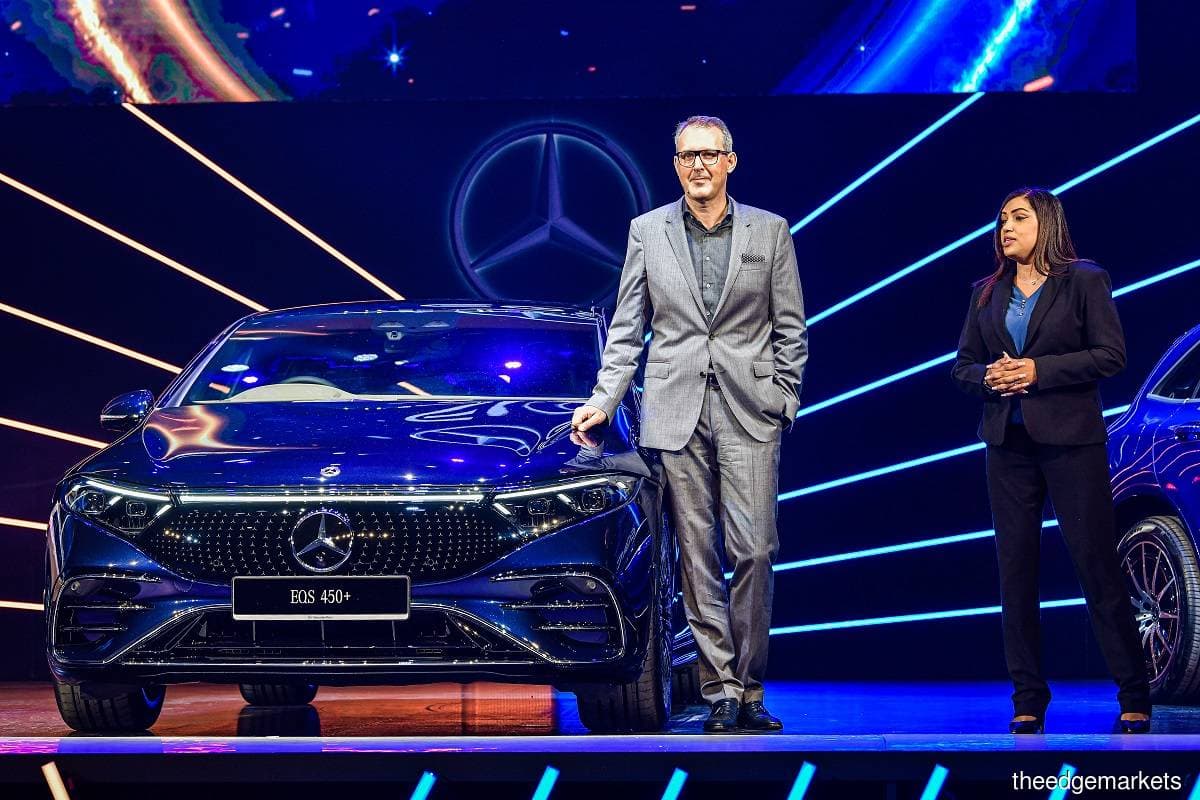
Mercedes-Benz Malaysia, which has seen strong demand for its first EV — the EQA, launched here in March this year — has introduced three luxury EVs from its Mercedes-EQ sub-brand as the company commits to paving the way for an electric future in Malaysia, in line with its global direction to go all-electric by the end of the decade, where market conditions allow.
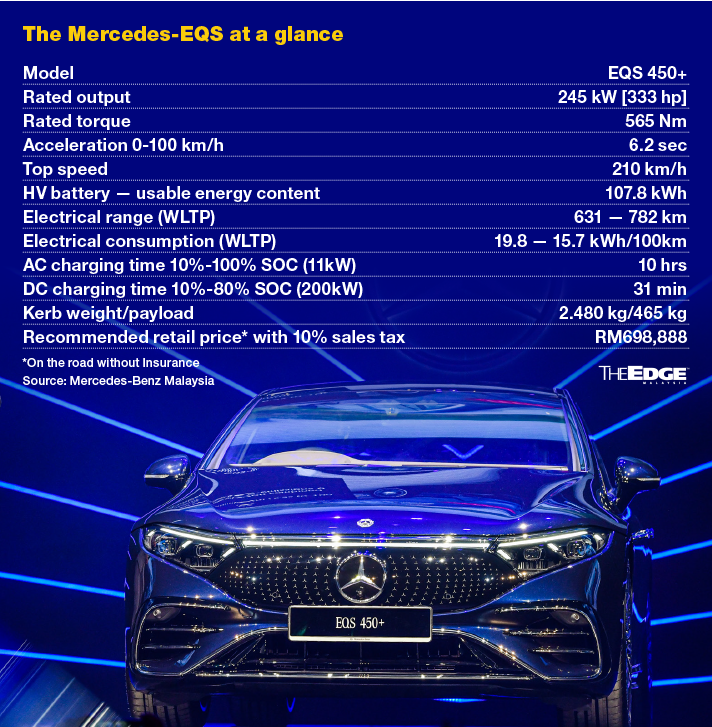
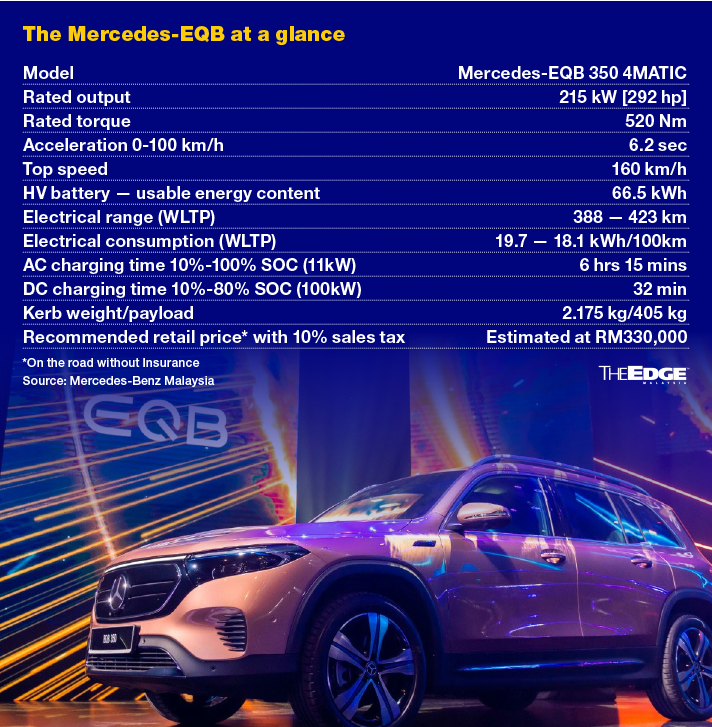
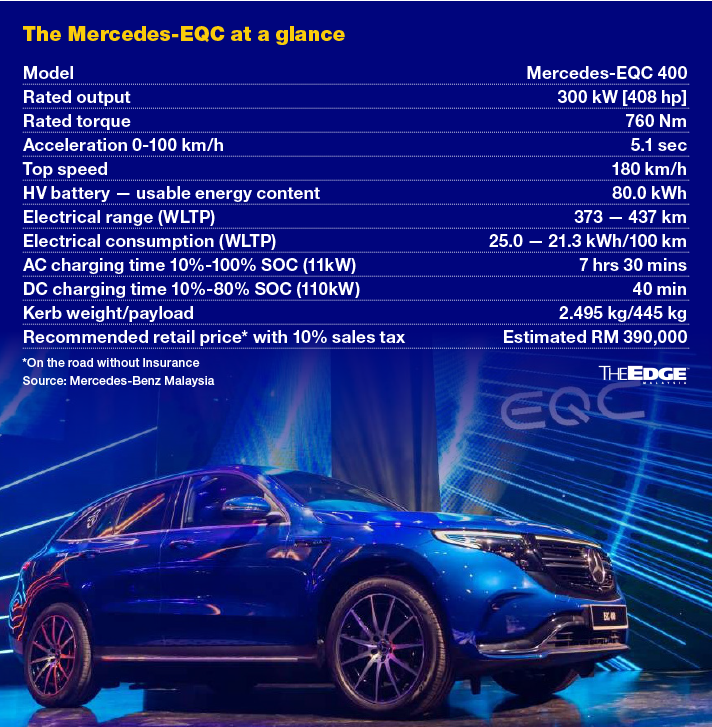
The three EV models are the EQS 450+, the EQB 350 4MATIC and the EQC 400 4MATIC. The recommended retail price (RRP) for the EQS 450+, together with a 10% sales tax, is RM698,888, while the EQB 350 4MATIC's RRP is RM330,000; the EQC 400 4MATIC's RRP is RM390,000.
Sagree said demand for these three EVs has been “relatively high” even before the launch. Going forward, she expects even greater interest from car purchasers.
“We have already secured orders in the system for these specific [newly-launched] vehicles without customers having the ability to see them physically. So, we are very confident as we bring in the vehicle range, that there will be quite a degree of interest in EQC (400 4MATIC), EQB (350 4MATIC) and EQS (450+),” Sagree said.
Noting that Malaysia’s electric car adoption is relatively low, Sagree pointed out that the biggest challenge is still the charging infrastructure.
“We are continuing with our efforts when it comes to charging infrastructure and ensuring that we are contributing. We have seen massive development [in charging infrastructure] in the last year, so we are quite confident this (area) will improve in the longer term,” she explained.
Previously, the German marque previously set a target of installing 13 new direct current fast charges across the country. It has installed five to date and plans to set up the rest by early 2023.
On top of that, Mercedes-Benz Malaysia will install five high-speed chargers under a collaboration with Petronas Dagangan Bhd (PDB). Branded as ENERGISE, Sagree said two high-speed chargers are already in place, while the remaining three will be installed by the end of the year.