


This article first appeared in The Edge Malaysia Weekly on March 9, 2020 - March 15, 2020
This monthly report is compiled and briefly summarised by a group of lawyers on a voluntary basis for the benefit of readers of The Edge.
Please consult your own lawyers if you need advice on the cases, issues and related matters highlighted here.
CONSTITUTIONAL LAW
THE National Security Council Act 2016 (‘NSCA’): Majority of the Federal Court (‘FC’) expressed ‘grave doubts’ that the NSCA is constitutional but refrained from determining the constitutional issues referred to it (‘Referred Issues’) in the absence of an ‘actual controversy’ between the litigants. The minority, comprising the CJ and CJSS, dissented and held that the NSCA is unconstitutional.
The NSCA is the only legislation in Malaysia enacted pursuant to Article 66(4A) of the Federal Constitution (‘Constitution’) — the assent of the Yang di-Pertuan Agong (‘YDPA’) was assumed after 30 days had elapsed from the date the bill was presented to the YDPA (‘Assumed Assent’). The NSCA came into force on 1.8.2016 following Assumed Assent and the NSCA generated considerable controversy amongst members of the public. Since it became law, it had not been invoked by the Executive. In this sense, may the NSCA be constitutionally challenged in the absence of a factual context? Or, must one wait until the Executive had acted upon it before its constitutionality may be challenged?
The reference jurisdiction of the FC (‘RJFC’) concerning constitutional issues is housed in Article 128(2) of the Constitution. It is to be read together with s 84(1) of the Courts of Judicature Act 1964 (‘CJA’) — in any proceedings in the High Court (‘HC’) a question arises as to the effect of any provision of the Constitution, the HC may stay the proceedings on terms as may be just ‘to await the decision of’ the FC in respect of the constitutional issue. Under s 84(2), the stay may be made either by the HC Judge or on the application of a party at any stage of the proceedings ‘as the Judge sees fit having regard to the decision of such questions of fact as may be necessary to be settled to assist’ the FC in deciding the question. If a stay is ordered, the HC shall state the constitutional questions requiring determination by way of a special case stated under s 84(3) of the CJA. Under s 85, when a special case is referred to the FC, the FC ‘shall deal’ with the case and hear and determine it in the same way as if it were an appeal to the FC.
Issues
In Datuk Seri Anwar Ibrahim v Government and The National Security Council, Datuk Seri Anwar Ibrahim (‘Appellant’) challenged the constitutionality of the NSCA and several constitutional questions were referred to the FC. The Referred Issues included (a) whether the NSCA, which became law pursuant to several amendments of the Constitution leading to Assumed Assent (‘RA Amendments’), violates the basic doctrinal structure of the Constitution (‘Basic Structure Doctrine’); (b) if the RA Amendments violated the Basic Structure Doctrine, whether the NSCA is unconstitutional; and (c) whether the substantive provisions of the NSCA are unconstitutional in that the NSCA was not enacted in accordance with Article 149 of Constitution, which permits the making of security laws containing provisions that are inconsistent with certain guaranteed fundamental liberties of persons in Part II of the Constitution.
The Referred Issues raised a fundamental question requiring answer — the ambit of RJFC. Must the FC in all cases automatically or invariably determine those constitutional questions referred to it pursuant to the RJFC? If otherwise, under what circumstances may the FC decline to determine the questions?
Case summary and decision
The Appellant filed an action in the HC to declare that the NSCA was unconstitutional. Skipping the history of the proceedings, the Appellant filed a reference application for the Referred Issues to be transmitted to the FC for determination. The Respondents did not object and the HC agreed to the application and stated a special case for transmission to the FC.
The majority of the seven-member bench of the FC in a judgment delivered by Nallini Pathmanathan FCJ (Azahar bin Mohamed CJM, Mohd Zawawi bin Salleh FCJ, Abang Iskandar bin Abang Hashim FCJ (now CJSS) and Idrus bin Harun FCJ concurring) held that it is not in all cases that the FC must determine the constitutional issues referred to it. On the facts of the case stated, there is no concrete or actual controversy between the parties and the existence of special factors to justify the exercise of the RJFC. As such, the majority save for expressing ‘grave doubts’ that the NSCA is constitutional, declined from determining the Referred Issues. Tengku Maimum CJ and David Wong CJSS (as he then was) dissented and delivered separate decisions that the Referred Issues should be determined and did determine the Referred Issues.
Majority judgment: RJFC
The majority opined that constitutional review of the validity of legislation is based either on (a) the common law model; or (b) the continental European model. The approach of the two models is different. Malaysia adopts the common law model. Under the European model, constitutional review is generally (a) ‘centralised’ in that the review is conducted only by a specialised constitutional court; and (b) the review is abstract in that it is without reference to a factual context. In contrast, constitutional review under the common law model is generally (a) ‘decentralised’ in that all ordinary courts of general jurisdiction have the power to determine the constitutionality of legislation and the apex court is the final court of appeal; and (b) the review is ‘concrete’ or is contextually driven by reference to the facts.
Decentralised constitutional scheme
Under the constitutional scheme of the Constitution, the FC does not have exclusive jurisdiction to determine constitutional issues save for its exclusive original jurisdiction in respect of the matters provided for in Article 128(1). Except for the matters in Article 128(1), the HC is empowered to interpret the Constitution with the FC as the final court of appeal on all questions of law. This constitutional role of the FC is also reflected in s 84 of the CJA, which replaced the original version of s 48(1) of the CJA by substituting the word the HC ‘shall’ for the word ‘may’ stay the proceedings. The majority held that this amendment was to avoid impression that the FC has exclusive jurisdiction on constitutional issues beyond Article 128(1).
‘The original mandatory language of section 48 was inconsistent with the constitutional scheme… in that it deprived the High Court of power to decide constitutional questions arising in proceedings before it… Thus, the CJA was swiftly amended in 1964 itself by substituting the word “shall”… with “may”. The purpose of the amendment was to ensure conformity with the constitutional scheme, and to avoid any impression that section 48 had the “effect of extending the exclusive jurisdiction of the Federal Court to decide the constitutional questions beyond the limits on the exclusive jurisdiction prescribed by the Constitution”…’
Justice Nallini Pathmanathan
Concrete review requires an actual controversy
The general rule under the concrete review approach is against determining abstract, academic or hypothetical questions. Thus, the mere existence of a law does not automatically yield a basis for a constitutional challenge. There must also be an ‘actual controversy’ between the parties by reference to the substratum of factual disputes from which the controversy arises. In some cases, the substratum of the factual disputes might have disappeared by the time the case is heard and in other cases, it might be absent from the outset. In both situations, there is no factual context to support a judicial decision.
Within the context of the general rule, there will be cases where important questions of public law are raised but which do not involve detailed consideration of the facts. In this category of cases, the Court reserves discretion to hear a matter which has become academic provided there is ‘a good reason in public interest’ to do so, such as a large number of similar cases are pending and determining the point of law raised would help to resolve the cases. Referring to case law from other jurisdictions, it was also held that there may be ‘exceptional cases’ (as opposed to being an exception to the general rule) where the existence of the law itself may affect the rights of parties due to certain factors which will give rise to an actual controversy — the impugned law ‘specifically targets a particular group’, or there is a real and credible threat of prosecution under the impugned law (‘Special Factors’).
Construction of s 84(2) of the CJA
In construing s 84(2) of the CJA, the majority held that the words ‘having regard to the decision of such questions of fact as may be necessary to be settled to assist’ the FC in s 84(2) of the CJA separates questions of law from questions of fact. The words envisage that there must be a factual basis for the constitutional issues to be referred to the FC.
‘The separation of the question of law to be referred from questions of fact in section 84(2) appears to envisage some factual basis underlying the constitutional question to be referred. The section indicates that “the Federal Court does not assume jurisdiction of the whole case but only of the constitutional issue, remitting the case to the court of original jurisdiction for disposition in accordance with the constitutional determination”…’
Justice Nallini Pathmanathan
Nallini Pathmanathan FCJ also buttressed the need for an actual controversy upon the principle that there must be finality to litigation.
‘The need for the existence of a concrete dispute is also to ensure finality in the court’s judgments; if there is in fact no real subsisting controversy, an issue decided in the abstract would not be res judicata and could be reopened again and again.’
Justice Nallini Pathmanathan
The Referred Issues are ‘abstract’, academic’ or hypothetical’
The majority opined that the Court should not (a) anticipate a question of constitutional law in advance of a necessity in deciding it; and (b) establish a constitutional rule broader than its precise facts. On the facts of the case, the majority declined to determine the Referred Issues under the general rule and in the absence of Special Factors.

(Clockwise from top left) Azahar bin Mohamed CJM, Mohd Zawawi bin Salleh FCJ, Abang Iskandar bin Abang Hashim FCJ (now CJSS), Nallini Pathmanathan FCJ and Idrus bin Harun FCJ
‘In this case, the Plaintiff does not assert that the NSCA has been invoked so as to violate his rights or interests, or that of anyone else. His grievance is purely legal, directed against the alleged inherent unconstitutionality of the Act. The constitutional questions referred to us arises from no other fact than the very existence of the Act itself.
…
Whilst we recognise that in principle, the very existence of an allegedly unconstitutional law may in some cases give rise to an actual controversy affecting the rights of the parties, it has not been demonstrated to our satisfaction that the present case falls within that exceptional category… It has not been shown that the very existence of the NSCA in the statute books interferes with the conduct of the Plaintiff’s personal life or that of any other person…
In the absence of an actual controversy affecting the rights of parties, the constitutional questions referred to us are abstract and purely academic… To answer the questions posed would be a significant departure from the deep-rooted and trite rule that the court does not entertain abstract or academic questions, and may even represent a fundamental shift away from the common law model of concrete review towards the European model of abstract review in constitutional adjudication. Exceptionally cogent reasons would need to be provided to persuade the Federal Court to undertake such a radical departure from established principle…’
Justice Nallini Pathmanathan
Dissenting judgments of the CJ and CJSS
The FC is bound to determine the Referred Issues
The learned CJ and CJSS held that once a special case has been referred to the FC, the FC does not have the discretion to refuse to hear the reference because s 85(1) of the CJA provides that the FC ‘shall deal’ with the Referred Issues.

Tengku Maimun binti Tuan Mat CJ
‘It is a settled general principle of law that the Courts must construe legislation in accordance with their ordinary words and meaning in line with the intention of Parliament. As a corollary, the judicial role does not permit judges to import external words and meaning into legislation
against what Parliament had intended. In this regard, section 85(1) of the CJA 1964 clearly stipulates that once a special case is transmitted to the Federal Court pursuant to section 84 of the CJA 1964, the Federal Court ‘shall… deal with the case and hear and determine it in the same way as an appeal to the Federal Court’. Therefore, the mandatory language of section 85(1) does not allow the Federal Court to refuse to hear a special case referred to it by the High Court.’
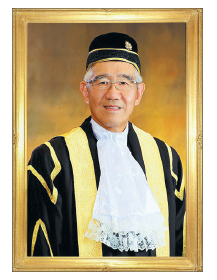
David Wong CJSS (as he then was)
‘The operative words here are “shall deal”. What that means is simply that once a valid special case has been transmitted, the CJA makes it plain that the Federal Court has no choice but to decide those issues. I use the phrase ‘valid special case’ because I cannot discount the possibility of there being cases where the questions posed are not those pertaining the effect of the provisions of the Constitution. If I may say so here, this power to review whether the reference is a valid one resides in the inherent jurisdiction of this court.
There may of course be other cases where the requirements of a special case have not been met and in such situations, the Federal Court has the power to remit the case to the High Court but certainly not on the basis that the Federal Court has some apparent discretion to refuse the High Court’s transmission of the special case — but on the basis that there is no special case to begin with.’
The Referred Issues are not ‘abstract’, academic’ or hypothetical’
The learned CJ agreed that the FC generally does not entertain abstract, academic or hypothetical questions. However, this test is for deciding whether the FC should grant an applicant leave to appeal against a decision originating from the HC under s 96 of the CJA. The s 96 CJA test does not apply to constitutional reference proceedings under s 84 of the CJA. In this respect, Article 4(1) of the Constitution states that a law passed by Parliament, which is inconsistent with the Constitution, is to that extent void. Thus, to suggest that there is no ‘live’ issue in the Referred Issues until and unless the Executive had acted upon the NSCA is untenable. The learned CJ agreed with the learned CJSS that one should not adopt a ‘wait and see’ attitude. What ‘is a live practical question’ depends on the circumstances of the particular case under consideration.
‘…the issue in the instant case is very much a live one. It concerns the validity of a law passed by Parliament. Article 4(1) of the Federal Constitution stipulates that a law passed by Parliament which is inconsistent with the Federal Constitution shall, to the extent of the inconsistency be void. Only the Courts are exclusively seized with the power to make declarations of unconstitutionality. This constitutes the inherent power of the Court in line with the doctrine of separation of powers, check and balance and the Rule of Law…
…
In this particular case, so long as the NSC Act 2016 exists in the statute books, the Executive are free to act on it. The argument in this case is that the NSC Act 2016 was not validly enacted, or, even if validly enacted, it was enacted in disproportion to the right of freedom of movement. The passing of the NSC Act 2016 causes it to exist and it affects all persons in Malaysia. The lis or live dispute before us is thus the validity of Parliament’s act of enacting the NSC Act 2016 as against the Federal Constitution. In this context, I agree with the learned CJSS that the Courts cannot take a ‘wait-and-see’ approach because a void law remains void. The challenge to its validity is not therefore conditioned upon action by the Executive.’
Tengku Maimun CJ
Referring to Article 4(1), the learned CJSS held that for the FC to adopt a ‘wait and see’ stance is not in concordance with the oath of the office of a Judge. Determining the Referred Issues is not judicial but Constitutional supremacy.
‘…If one looks at it holistically, there is in fact no vacuum as the subject matter here is NSCA 2016 and the complaint is that Parliament had breached its constitutional duty by passing an unconstitutional Act…
Must we, the Court, wait idly by for someone to be arrested or, for instance in this case, the Executive to exercise their powers under the NSCA 2016 and for someone to be adversely affected before the validity of that statute or its provisions may be challenged? In other words, is it the untenable general proposition that we must first wait for the Executive to act on the law before the validity of that law may be called into question? Surely the answer is an emphatic ‘no’ as there has been constitutional breach by the legislature. Judges when taking their oath of office swear a constitutional oath to protect, defend and preserve the Constitution. As the only guardian of the Constitution, the Courts must not only not wait but must also ensure that the path to seek justice is not littered with unnecessary hurdles such that access to justice becomes illusory.’
David Wong CJSS (as he then was)
The learned CJ accepted that courts in other jurisdictions have held that challenges to legislation in the abstract should only be done in ‘exceptional cases’. However, the learned CJ held that the Constitution should be interpreted on its own terms.
‘...In my view [the decided cases from other jurisdictions] do not apply for two reasons. Firstly, in interpreting provisions of the Federal Constitution… judicial precedent ought to play a lesser part than its normal in matters of ordinary statutory interpretation. Secondly, the Federal Constitution is primarily to be interpreted within its own four walls and not in the light of analogies drawn from other countries…’
Tengku Maimun CJ
Dissenting judgments on construction of s 84(2) of the CJA
The learned CJ and learned CJSS dissented on the premise that s 84(2) should be construed to include referral of pure constitutional law questions. In the judgment of the learned CJ, constitutional questions may not include, or may not necessarily be bound up with, uncertain factual questions in all cases. If the referred constitutional issue involves determining mixed questions of law and fact, then the matter should be referred back to the HC to determine the factual issues first, for it would be premature for the FC to determine the constitutional issues. In the instant case, the Referred Issues are pure questions of law that the FC can, and is its mandatory duty to, determine under s 85(1) of the CJA. Upon proper construction, s 84(2) does not exclude pure questions of law.
‘Our law in section 84(2) of the CJA 1964 recognises [that if there are uncertain factual questions, the High Court should first resolve it before referring the constitutional issues to the Federal Court and] which is why [s 84(2)] stipulates that the High Court Judge may transmit a special case at any stage of the proceedings ‘having regard to the decision of such questions of fact as may be necessary to be settled to assist the Federal Court in deciding the question which has arisen…’
Tengku Maimun CJ
‘This provision guides the High Court Judge on when an order for a stay of proceeding shall be made when there is constitutional reference to the Federal Court. One of the considerations is the decision of such questions of fact as may be necessary to be settled to assist the Federal Court. The other consideration is the speedy and economical final determination of the proceedings. This provision is not to be interpreted to impose a requirement that in every constitutional reference, there must be ‘questions of fact’…’
David Wong CJSS (as he then was)
No violation of the Basic Structure Doctrine
The Basic Structure Doctrine means that the power of Parliament to amend the Constitution is not absolute. Parliament can only amend the Constitution in a manner that does not offend or destroy the basic features in the constitutional structure. Royal assent is part of the legislative process of Malaysia. The question is whether the assent of the YDPA is assumed to have been given after 30 days had elapsed from the date the bill was presented to the YDPA under article 64(4A) had taken away the need for royal assent, or altered the substance of the basic legislative structure. The learned CJSS (the learned CJ concurring) held that the YDPA under the Constitution has no discretion in the matter of royal assent. The YDPD is bound to give assent ‘if so advised by the Cabinet to assent’. As a matter of construction, royal assent had not been abrogated under the RA Amendments.
‘…I now turn to the language of the amended Article 66(4) which still requires the YDPA to assent within a period of 30 days from when the Bill is presented but if it is not assented to, then clause (4A) of that article kicks in and the Bill shall become law ‘in the like manner as if he had assented thereto’.
…The overall effect of the amendments, as I see it, does not at all serve to remove the royal assent. Bills must still be presented to the YDPA… for the purpose of the royal assent. The difference post-amendment is that if a Bill is not assented to, then the said
Bill is taken to have been assented. Reading
it this way, the law simply does for the YDPA what he himself ought to have done in the first place. It is one thing to say assent is not given. It is another thing entirely to say that assent is taken to be given. In this sense, the process and result are not different… In whichever way we slice it, the net effect is that the Bill will become law.’
David Wong CJSS (as he then was)
The NSCA is unconstitutional
Article 74(1) empowers Parliament to make laws. Article 74(3) circumscribes that power by providing that it is ‘subject to any conditions or restrictions imposed with respect to any particular matter by this Constitution’. The fundamental liberties of citizens are guaranteed under Part II of the Constitution. Nonetheless, Article 149 (1) empowers the Parliament to pass an Act containing provisions that are inconsistent with certain guaranteed fundamental liberties for the purpose of stopping or preventing subversive actions. The qualification is that that Act of Parliament must recite ‘that action has been taken or threatened by any substantial body of persons, whether within or outside’ Malaysia to carry out the types of subversive actions enumerated in Article 149(1). The NSCA contains provisions that are inconsistent with certain guaranteed fundamental liberties but it did not recite that the NSCA was enacted pursuant to Article 149 of the Constitution. The learned CJ and CJSS rejected the arguments of the Respondents that the NSCA is not a legislation caught by Article 149(1).
‘It is thus patently clear that the pith and substance of the NSCA 2016 by a very cursory but clear reading of its salient provisions indicate that it relates, at the very least, to the subject-matter of Article 149(1)(f) of the Federal Constitution. The entire NSCA 2016 is full of references to national security and with measures addressed to curb any incursions into or threats to it. One hardly need to read too deeply into the NSCA 2016’s pith and substance to determine its true nature as being a very severe law against the very subject of Article 149 of the Federal Constitution, namely: special powers against subversion, organized violence and acts and crimes prejudicial to the public.’
David Wong CJSS (as he then was)
In the dissenting judgment of the learned CJ, it was noted that the NSCA does not provide for preventive detention but it is wrong to construe that Article 149 ‘only include laws which cater for preventive detention’.
‘… the inclusion of an Article 149 in the recital in an anti-subversion law serves as a safeguard to ensure that any such law enacted is properly envisioned by the purpose enlisted in that Article. It is a settled principle of constitutional construction that constitutional provisions and laws which safeguard fundamental rights must be read generously and in a prismatic fashion which provisions that limit or derogate from those rights must be read restrictively… Because Article 149 is a safeguard of liberty, it cannot be construed to only include laws which cater for preventive detention. Such a reading, in my respectful view, would be inconsistent with Article 149.’
Tengku Maimun CJ
Save by subscribing to us for your print and/or digital copy.
P/S: The Edge is also available on Apple's App Store and Android's Google Play.